By Kristina Gabalski
I have some common milkweed in my landscape. These native plants can reach six feet high and spread pretty aggressively, but I have room to accommodate them, and they help Monarch butterfly populations grow.
I have always been interested in the mix of insects I find on my common milkweed, and I found some interesting information from Michigan State University Extension that details exactly what those insects are.
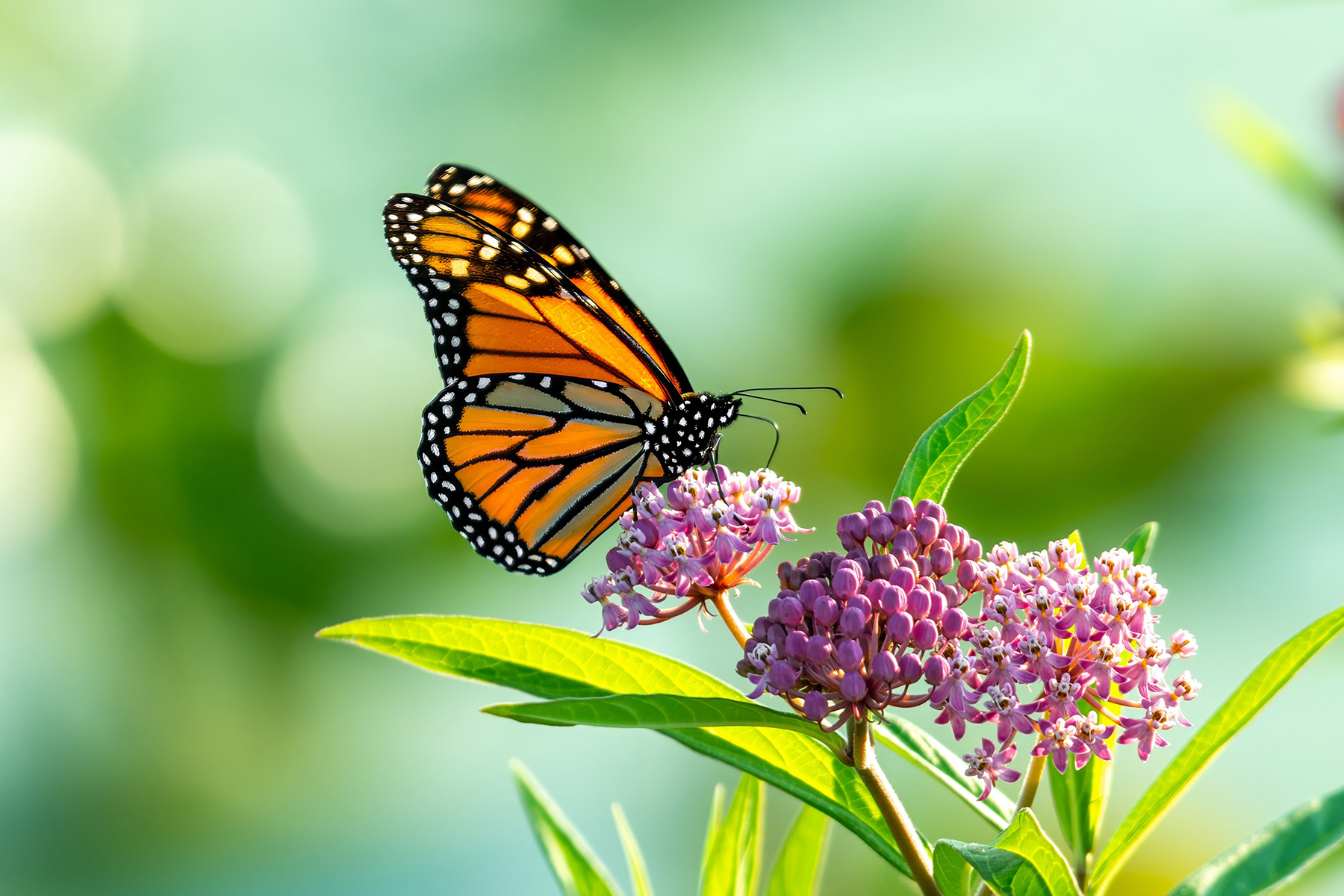
It’s always exciting to find Monarch butterflies, chrysalises, and caterpillars on my common milkweed plants. They are beautiful and very colorful. The caterpillars have bright yellow and white stripes but often are on the undersides of leaves as they munch. I search for them when I start seeing leaves that have been chewed around the edges. Monarch butterflies lay their eggs on common milkweed. Their caterpillars eat the leaves as they grow and fatten and prepare to metamorphose.
In addition to monarchs and their caterpillars, native bees are drawn to the rich nectar produced by common milkweed flower clusters. The clusters form mainly where leaves join the stem and are very funky-looking and sweet-smelling. The colors range from dusty rose to brownish purple. Michigan State Extension explains that the thick, white, latex-like sap in the milkweed plant contains chemicals that are toxic to many animals. Insects have adapted to bypass the plant’s chemical defenses, allowing them to feed on it. Some of them even incorporate the toxins into their own bodies, making them distasteful to predators, MSU explains. Milkweed insects are often brightly colored – a warning to potential predators. Michigan State University says although the insects on milkweed plants do their share of munching, none kill the plants.
Here are some other insects who enjoy the food and shelter common milkweed provides.
Milkweed tussock moth. These feed in mid-summer, changing from small white hairy larvae to white, black, and orange tufted “fuzzy wuzzies.” I know I have seen these frequently on my common milkweed and wondered what these fascinating creatures were.
Milkweed leaf beetles prefer swamp milkweed for dinner, but you may find them on common milkweed. These beetles look like a large lady beetle with red and black rounded bodies. Adults and larvae both eat the milkweed leaves.
Another interesting insect I know I have seen on my common milkweed is red milkweed beetles. These are reddish-orange long-horned beetles and have black spots. You will see them on the leaves in mid-summer. In their immature stage, they bore into the roots of milkweed plants.
You may also have spotted large milkweed bugs on your common milkweed. They are all orange with varying amounts of black, and they huddle on seed pods in late summer and fall. These insects insert their proboscis into the seed pods and feed on developing seeds.
Finally, the small eastern milkweed bug is also red and black. It has a red spot on its head and white marks on its wings. Don’t confuse it with the large milkweed bug or the boxelder bug, which is not a milkweed specialist, MSU explains.
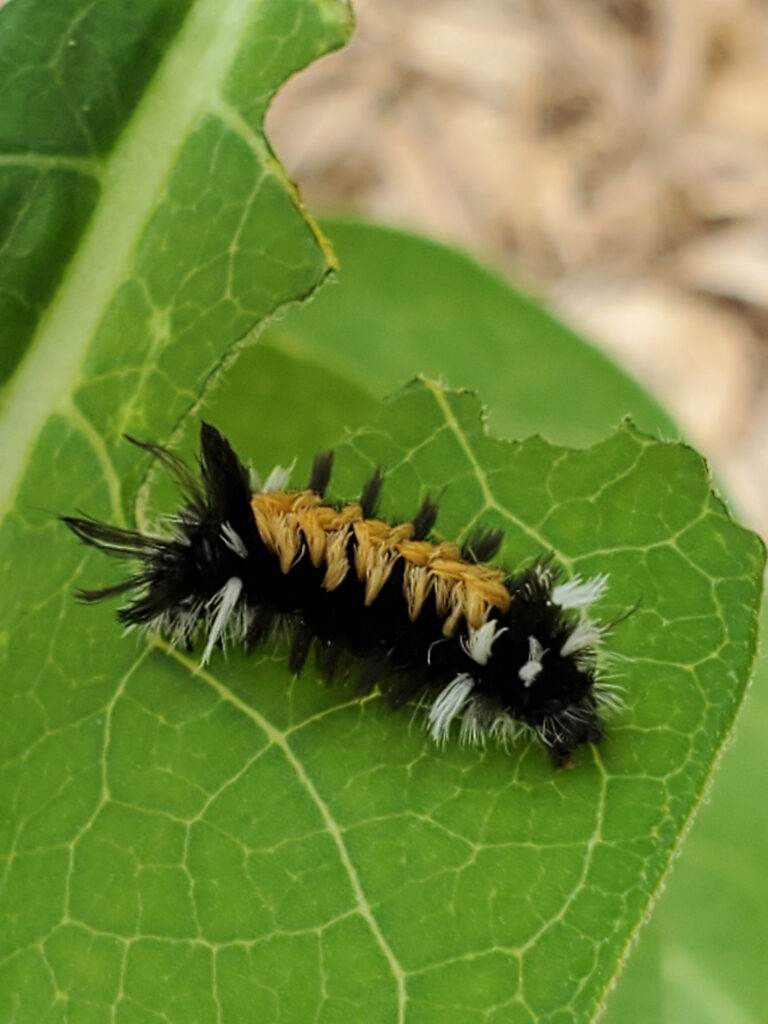
Many insects depend on common milkweed, including this attention-getter: a milkweed tussock moth caterpillar. Photo by Kristina Gabalski.
Featured Photo: Monarch butterfly on a common milkweed plant. Photo from AdobeStock.