Try to put yourself in the head of a young college student from some drought-ridden Asian country. She lives in a village where someone in her family has to carry a five-gallon pail of drinking water home every day from the community well. She was fortunate enough to win a full scholarship to a New York State liberal arts college and is enrolled in a course that has taken her on a field trip that begins at Niagara Falls.
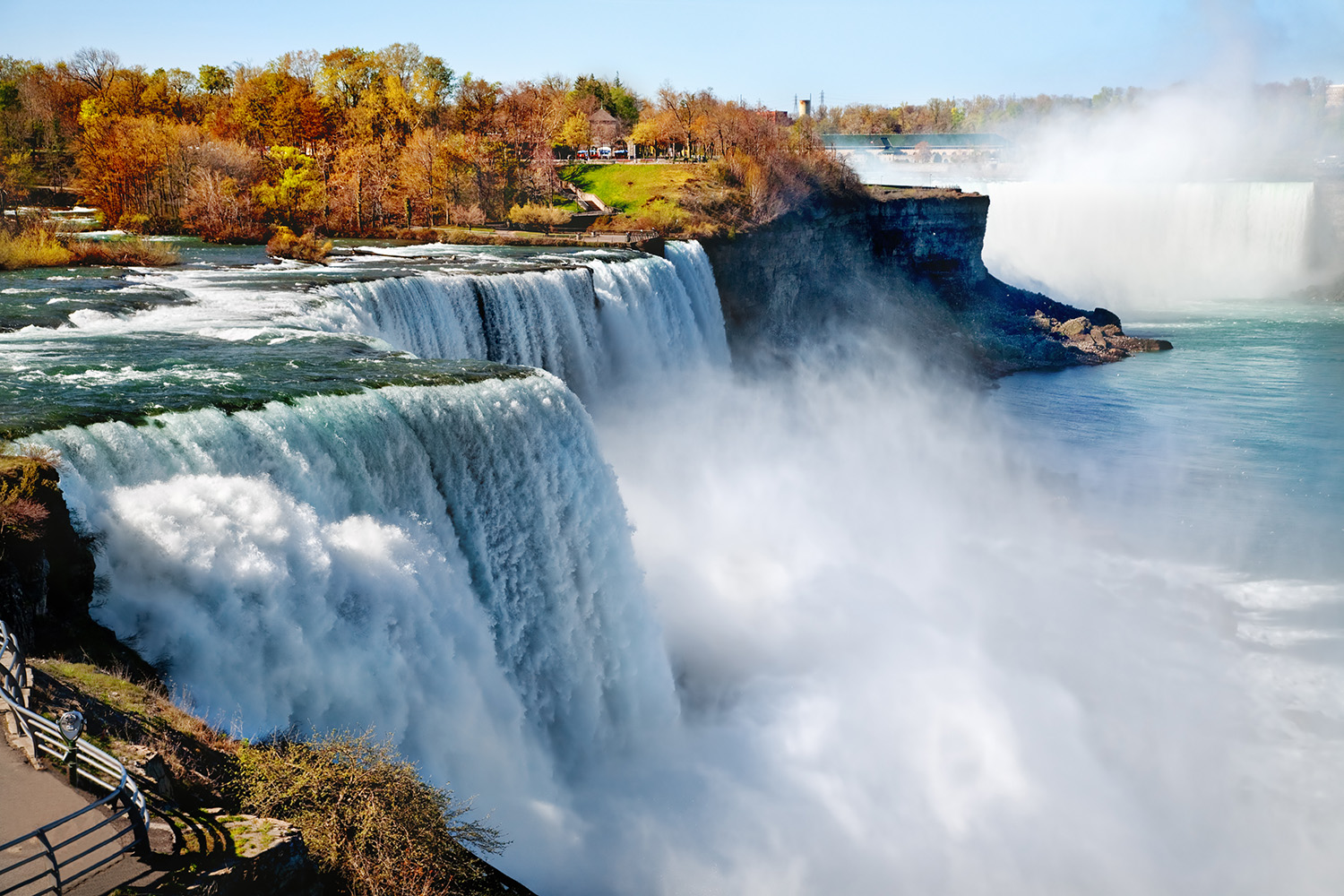
She is standing at the overlook of the American Falls, where she can see, hear, and feel the spray of the water as it flows past her and thunders over the brink into the Niagara River below. The professor who has organized the field trip has told her that if she looks across the top of the falls all the way over to the Canadian side, she will be watching 260,000 gallons of water per second plunging to the pool below. A little quick arithmetic tells her that’s about 52,000 of those water hauling buckets from back home crashing over the falls every second!
Later, she will calculate that it’s about 2,700,000,000 gallons of water per hour going over the falls or 13,000,000,000 five-gallon pails of water per day!
The professor tells everyone that they are now going to follow, in the bus, the path that this water takes after it goes over the falls. The bus pauses at Fort Niagara by the Coast Guard Station, and they all watch the Niagara River flow into Lake Ontario at a fairly rapid pace. From there, they travel along the southern shore of Lake Ontario, making occasional stops along the way to observe how the lake is used by man and nature, carefully noting that the level of the lake stays pretty much the same in spite of all the water going over Niagara Falls, 24/7.
When the bus gets to the Saint Lawrence River at the eastern end of the lake, they are reminded that the water is still going over Niagara Falls, into the lake behind them, at 3,160 tons a second, and that the river in front of them is carrying water out of the lake at about the same rate! But, going past them to where? The bus will take them there.
Eventually, they get to the estuary where the Saint Lawrence River flows into the Atlantic Ocean. There, the field trippers watch the fresh water from Lake Ontario coming down the Saint Lawrence River to the spot where it is being quickly turned into (yucky) salt water. The professor reminds the class that the sudden change from fresh water to salt water they are watching is happening at the same rate as new batches of fresh water continue going over the falls, way back where the field trip started (at 760,000 gallons per second)!
The visiting student must be overwhelmed by what she sees, but out of respect for the opportunity she has been given to study abroad, she knows she must not be critical. However, she must be thinking, “How can the Americans and the Canadians who are done with this water by the time it reaches this point, just let it go to waste like this. There are people all over the world who can only dream of this much fresh water sitting in one place. Why doesn’t someone channel some of this water to one side just before it hits the salt water and ship it to those who need it?”
Hopefully, the girl who lives in the village where drinking water is carried home in a bucket will include her thoughts in her written report of the field trip. Someone with the right connections might read it!