As the weather cools, New Yorkers turn up their thermostats and increase energy use. At a time when every penny counts, the Department of State’s Division of Consumer Protection (DCP) is sharing resources to help New York households weather the cold months.
“Long winters can become an economic burden for New Yorkers who normally experience an increase in their energy bills, and may create upheaval in daily budgets,” said Secretary of State Walter T. Mosley. “As we approach the 2026 winter season, the NYS Division of Consumer Protection offers valuable information on available resources to help insulate your homes and wallets from the cold weather.”
ENERGY AND BILL ASSISTANCE PROGRAMS:
- Energy Affordability Program (EAP): Half of all New York households are now eligible for relief through the Energy Affordability Program, and the program has received over 38,000 applications in just three weeks. Check eligibility guidelines and apply online via https://dps.ny.gov/energy-affordability-program.
- Home Energy Assistance Program (HEAP) benefit is available for eligible New Yorkers. Visit https://otda.ny.gov/programs/heap/ to learn more.
- Additional State Assistance Programs: Programs include direct assistance to pay bills, low-interest loans for home energy efficiency projects, and assessments for energy efficiency upgrades for both homeowners and renters. Explore these resources and programs by visiting https://www.nyserda.ny.gov/Residents-and-Homeowners/Energy-Bill-Assistance.
COMMUNITY RESOURCES:
DCP has free resources to assist New Yorkers with their budgets, including:
- Money Savings Guide (https://tinyurl.com/3j6jvzev), offering more than 75 tips designed to help New Yorkers reduce everyday expenses, including energy bills and ideas on how to stretch their household budgets.
- Home Heating with Oil and Propane Guide (https://tinyurl.com/yc2u23k8) provides shopping guidance to help heating oil and propane fuel consumers reduce their heating bills.
- Community Workshops: The DCP Education and Outreach team is available to present Managing Utility Costs, which is an informative workshop available to be delivered both in person and via webinar. This presentation provides information about consumer rights, bill payment options, and financial assistance to help manage utility costs. Our webinars and workshops offer opportunities for live question-and-answer sessions. To learn more, visit https://dos.ny.gov/consumer-education.
ENERGY-SAVING TIPS:
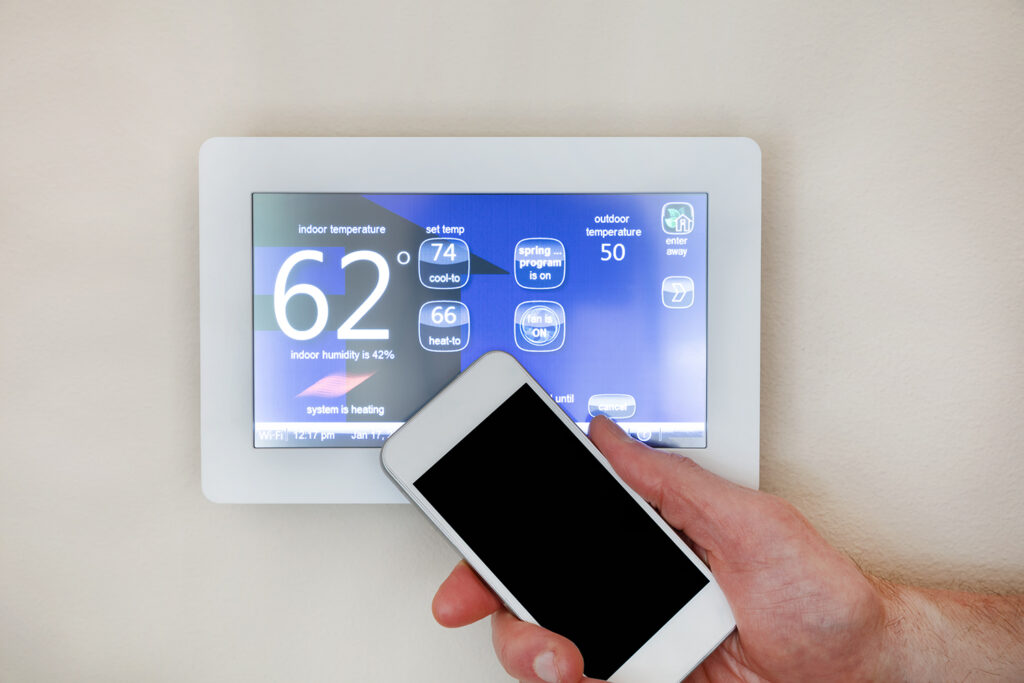
- Check Your Thermostat: Each degree you lower your thermostat can reduce fuel consumption by approximately 3%. A programmable thermostat can automatically adjust the temperature based on your home, work, and sleep schedule and provide estimated savings of 10-20% on your monthly heating and cooling bills.
- Improve Your Water Heater’s Efficiency: Water heating accounts for about 14% of your energy bill. Insulating your water heater, lowering water temperatures, insulating hot water pipes, and limiting hot water use can all reduce your energy bill.
- Weatherize and Insulate Your Home: Help your home to retain heat during cold weather by insulating your attic and outside walls, sealing and insulating heating ducts, removing window air conditioners, wrapping wall air conditioners, and sealing any cracks around walls and windows.
- Get Your Heating System Tested and Tuned: Conduct annual checkups to help ensure the efficiency of your system. Replace your furnace filters at least every three months to keep your equipment running efficiently, and consider replacing them monthly during heavy-use times such as summer and winter.
- Use Radiators Efficiently: Move rugs and furniture away from heating vents and radiators. Blocked ducts can disrupt air circulation and cause an imbalance in a home’s heating system. Placing heat-resistant reflector panels between radiators and walls can help heat the room instead of the wall.
- Use Appliances Efficiently: Conserve energy with larger appliances, like setting your refrigerator no lower than 38-40 degrees and loading your dishwashers and washing machines to full capacity. Appliances with the EnergyStar label can save you 20% or more on your energy bills. To learn more, visit https://www.energystar.gov.
- Get a Home Energy Audit: Conduct an energy audit of your home or apartment to determine where you can correct any problems or inefficiencies. Visit https://www.nyserda.ny.gov/All-Programs/Home-Energy-Plan for more information.
- Shut down your computer: Even in sleep mode, your computer can cost you over $100 a year. Don’t forget to turn off the monitor; it can use twice as much energy as the computer. Use an advanced power strip so that all computer accessories can be turned off with a single switch.
- Use rechargeable batteries and charging units: Rechargeable batteries are more cost-effective in the long term. Plug your battery charging system into a power strip so you can shut off power with the flick of a switch. For even more savings, use a power strip with a timer or a programmable power strip.
- Disconnect digital media players: Even when switched off, most electronics continue to draw power if they remain plugged in, often referred to as ghost electricity, vampire power, or phantom power. To save energy, plug entertainment products such as game consoles and audio and video players into an advanced power strip so you can turn them all off when they are not in use.
- Stream smarter: Streaming content through a game console uses up to 10 times as much energy as streaming on a laptop or tablet. Consider using another kind of device to stream—like a Blu-ray player, set-top box, or Smart TV that has earned an ENERGY STAR® label.
For more information on New York State home heating assistance and energy efficiency programs, visit NYSERDA at www.nyserda.ny.gov/All-Programs/Home-Energy-Efficiency-Upgrades, NYS Department of Public Service at https://tinyurl.com/ykakuuhp, or NYS Homes and Community Renewal at www.hcr.ny.gov/weatherization. For the Home Energy Assistance Program (HEAP), visit the Office of Temporary and Disability Assistance at www.otda.ny.gov/programs/heap/.
Provided information