Yellowing of Evergreens
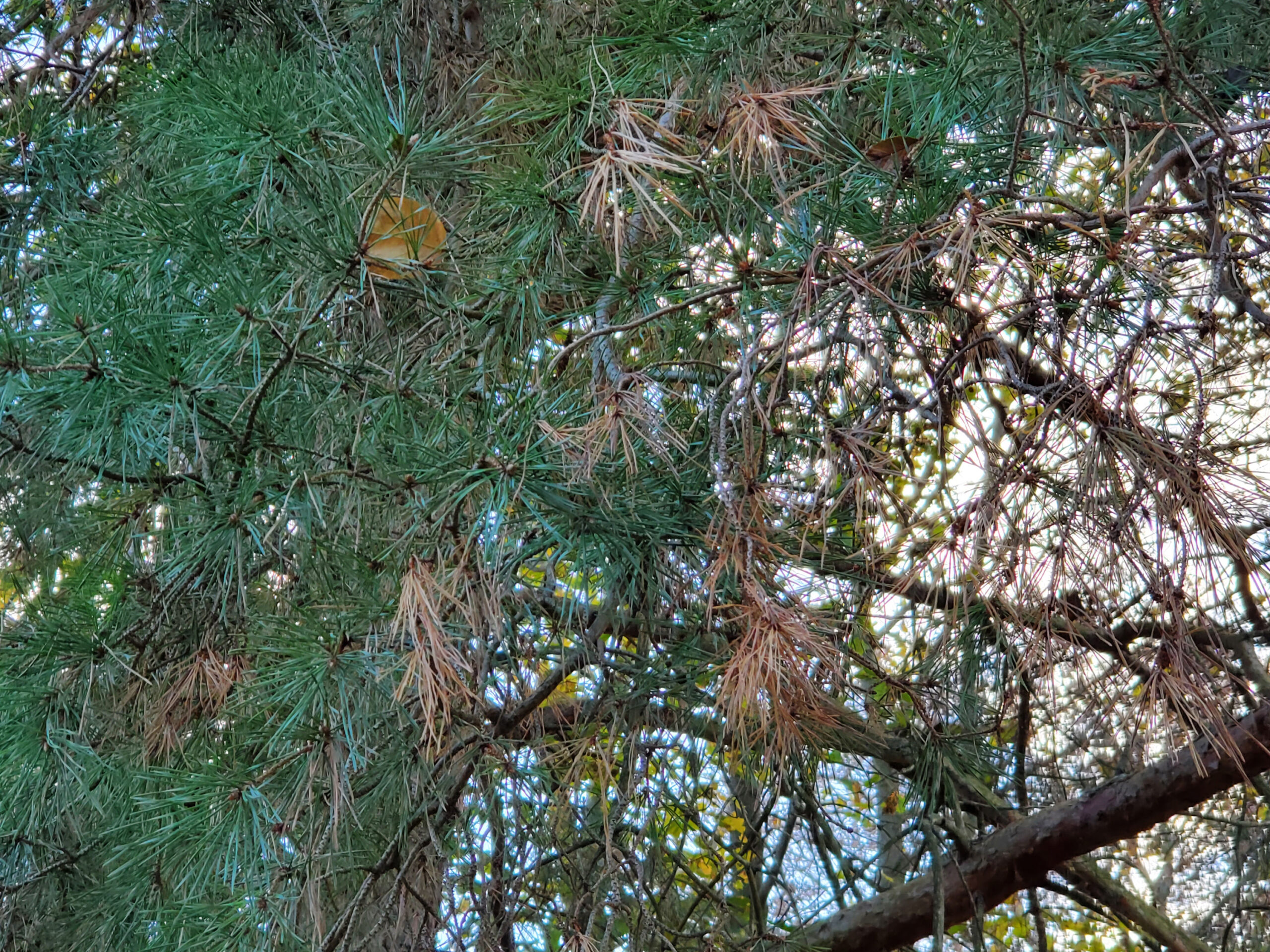
Gold is one of the beautiful colors of fall, but you might be alarmed if you notice that the needles on your evergreens are turning yellow and dropping. Don’t worry. The most likely explanation, especially later in the year, is that your tree is experiencing a natural drop of old needles.
University of Wisconsin explains that older, inner needles of evergreens discolor and drop off on a cyclical basis. Depending on the species, this can happen every year or every several years. Evergreen needle color change and drop are triggered by the weather and the season.
The most dramatically affected evergreens are white pines, which bear three years’ needles during the summer and two years’ needles in the winter. University of Wisconsin notes that vigorous shoots may have one year’s needles still attached by November, and they may not extend the length of the branch, while the three-year needles will turn yellow and fall. This might make the tree look unhealthy if the shedding needles outnumber the green needles. Don’t be alarmed. This is normal and natural.
Austrian and Scotch pine typically retain needles for three years, with red pine dropping its needles in the fourth year. In the case of these species, green growth typically outnumbers the yellow needles, meaning they will not have the unhealthy appearance that the white pines might have.
Arborvitae – white cedar – have flat needles that turn brown as they age and will remain attached to the tree much longer than old pine needles. Yew needles also turn yellow and drop in the late spring or early summer of their third year. Spruce and fir needle color change and drop may not be as noticeable because the trees retain their needles for several years, and the drop is mainly from the inner branches.
Do not confuse natural needle drop with disease or insect problems. Needle color change and drop are seasonal and will affect the tree throughout its interior portion.
You can examine needles carefully if you have any doubts about the health of your tree. The University of Wisconsin notes that needles that are naturally turning yellow and dropping may sometimes have spots and blemishes, but nothing more, and older needles may also exhibit brown coloration.
Fungal diseases, on the other hand, can cause severe needle discoloration and needle drop. Be aware of this, especially if you notice damage on current-season needles. Additionally, mites can cause non-seasonal needle drop, especially on spruce trees. You will notice a light webbing develop with heavy infestations. You can check for mites by holding a sheet of white paper under a branch. Tap on the branch sharply, and you will see the mites that drop onto the paper. Spruce also may suffer from needle miners, which produce clusters of dried, mined needles, usually webbed together. Aphids can cause severe yellowing of white pine needles, particularly new needles, not old needles that are preparing to drop. Herbicide injury can also cause needle yellowing and drop. Use herbicides according to label directions and do not let drift affect healthy plants and foliage.
One more thing to keep in mind, especially with younger evergreens, is that late fall is a good time to water/irrigate before the ground freezes to prevent winter injury through desiccation.
Should you be concerned if you see yellowing of evergreen needles and needle drop? Photo by Kristina Gabalski.