By Kristina Gabalski
December 21 is the winter solstice, the shortest day of the year. Climate specialists are more specific: it is the day when the noon sun is at its lowest point in the sky all year.
Although the days are dark and cold, plants still play an important role at this time of year. You may be enjoying a poinsettia or amaryllis plant in your home right now, getting ready for winter sowing, still harvesting cool-season crops like carrots, or growing herbs on your windowsill.
Plants are significant to the holidays celebrated on or near the winter solstice. In an article entitled “Plants of the Winter Solstice,” the Oak Spring Garden Foundation in Virginia describes a long list of trees, shrubs, and vines important to these celebrations.
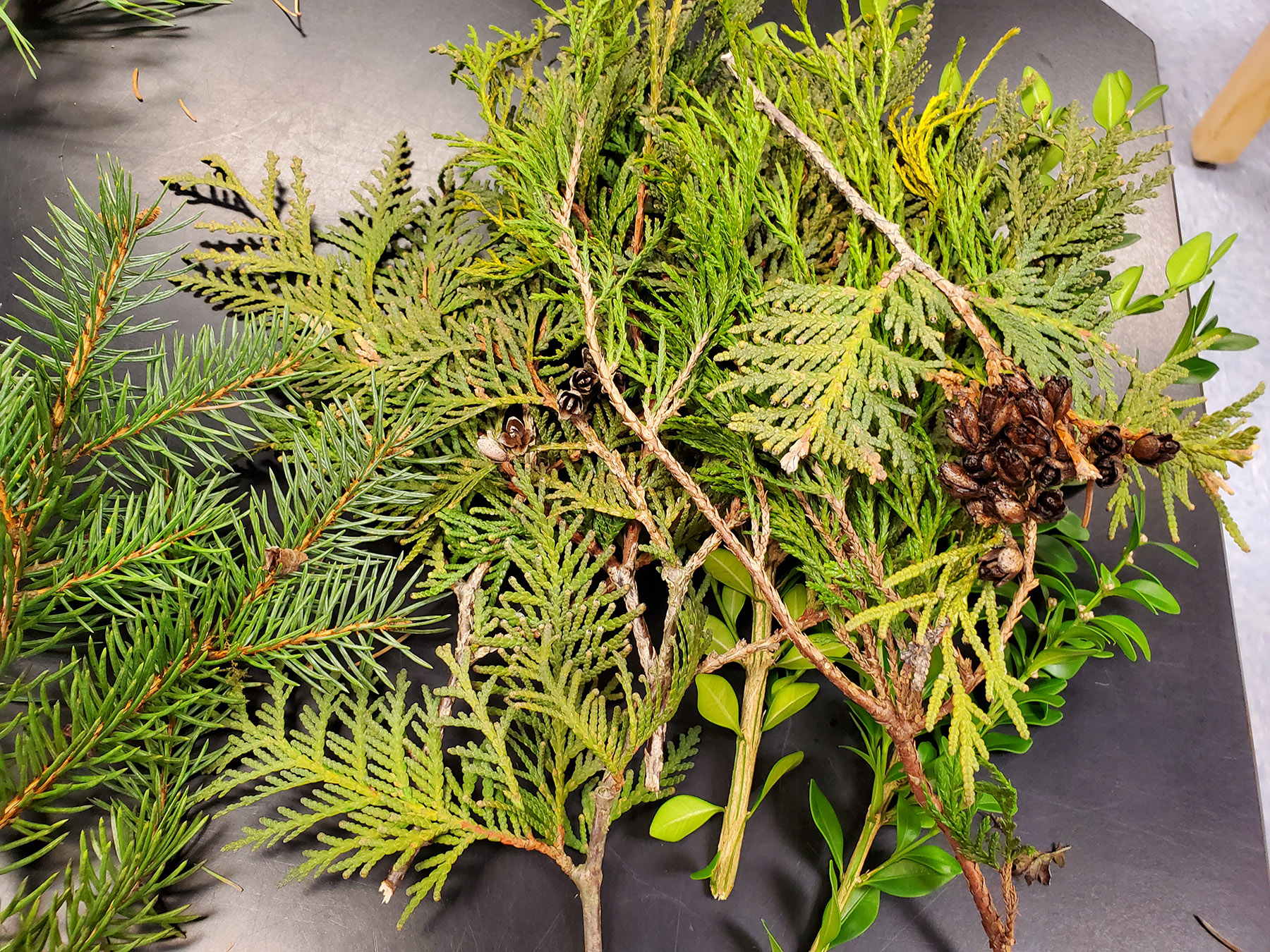
Evergreens, plants that hang onto their leaves and remain green even during the darkest and coldest months of the year, have fascinated people for millennia. Evergreens are associated with luck, protection, and goodwill. Romans used evergreens for decorations in their temples during December celebrations for Saturn, the god of agriculture. Celtic druids would place food on evergreen trees in hopes of assuring a good harvest in the new year. Evergreens and evergreen wreaths symbolize eternity for Christians celebrating the birth of Christ just after the solstice.
Mistletoe is often used as decoration at this time of year. Native to Europe and Northern Africa, the plant is not only poisonous but also parasitic, taking essential water and nutrients from the trees upon which it grows. Mistletoe has been used through the ages as a cure-all to treat many maladies, including skin ulcers and epilepsy. Romans and Celtic Druids would hang the leaves in their homes for good fortune and peace at this time of year. It is also associated with fertility, which helps to explain our modern-day “kissing under the mistletoe” tradition.
The time around the winter solstice is often called yuletide. The Oak Spring Garden Foundation says the word yule is derived from an Old Norse word which refers to a winter solstice festival honoring the Norse god Jolnir (Odin). The yule log tradition, which began in Western Europe, revolved around a tree trunk or large branch that burned during the longest nights of the year. Oak trees were often the wood of choice because of their association with strength and endurance. Today, people enjoy cakes shaped and decorated to look like a log from a tree.
Speaking of oak trees, they were very important to the ancient people of Europe. To them, the large trees represented the sun, strength, and wisdom, Oak Spring Garden Foundation says. Druid – a term used for ancient Celtic priests – derives from the Celtic word for oak (duir). Oaks often harbored mistletoe (another significant winter solstice plant) and were used in fires during the winter months. People would then sprinkle ashes from the winter solstice oak fires on their fields to symbolize spreading the power of the sun to their crops.
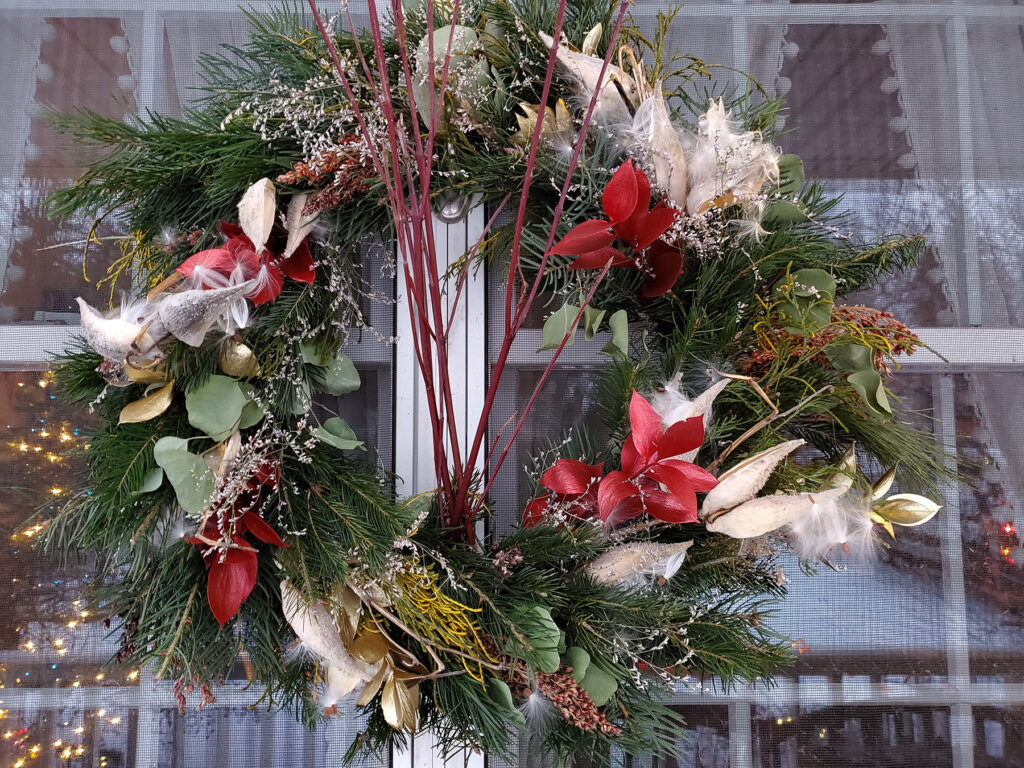
Both the evergreens and the circular shape of holiday wreaths symbolize eternity. Photo by Kristina Gabalski.
Evergreens have special significance at this time of year when the winter solstice brings the shortest days of the year. Photo by Kristina Gabalski.