As you make plans for the upcoming growing season, you might want to consider planting sumac. Sumac is a native plant in the genus Rhus and is a member of the cashew family. Sumac varieties include staghorn sumac (Rhus typhina), smooth sumac (Rhus glabra), winged sumac (Rhus copallinum), and fragrant sumac (Rhus aromatica).
All these varieties are found in USDA Plant Hardiness Zones 4-8 and grow best in full sun to partial shade. Penn State University Extension says sumac grows in well-drained soil and is drought-tolerant in urban, suburban, or rural environments. Sumac spreads by underground suckers and works well as hedges, visual screens, and for naturalizing. Penn State says the plants even tolerate salt spray and runoff. Additionally, sumac is pest resistant.
Sumac has multi-season interest with bright green foliage in early spring. As summer approaches, flowers appear at the tips of branches. These creamy white to yellow flowers attract native bees, butterflies, and even hummingbirds. Native sumacs are dioecious, Penn State notes, meaning that they have male and female flowers on separate plants. Songbirds are attracted to the berry-like fruit clusters called drupes, as insects can be hidden inside. Wildlife enjoys the seeds in winter.
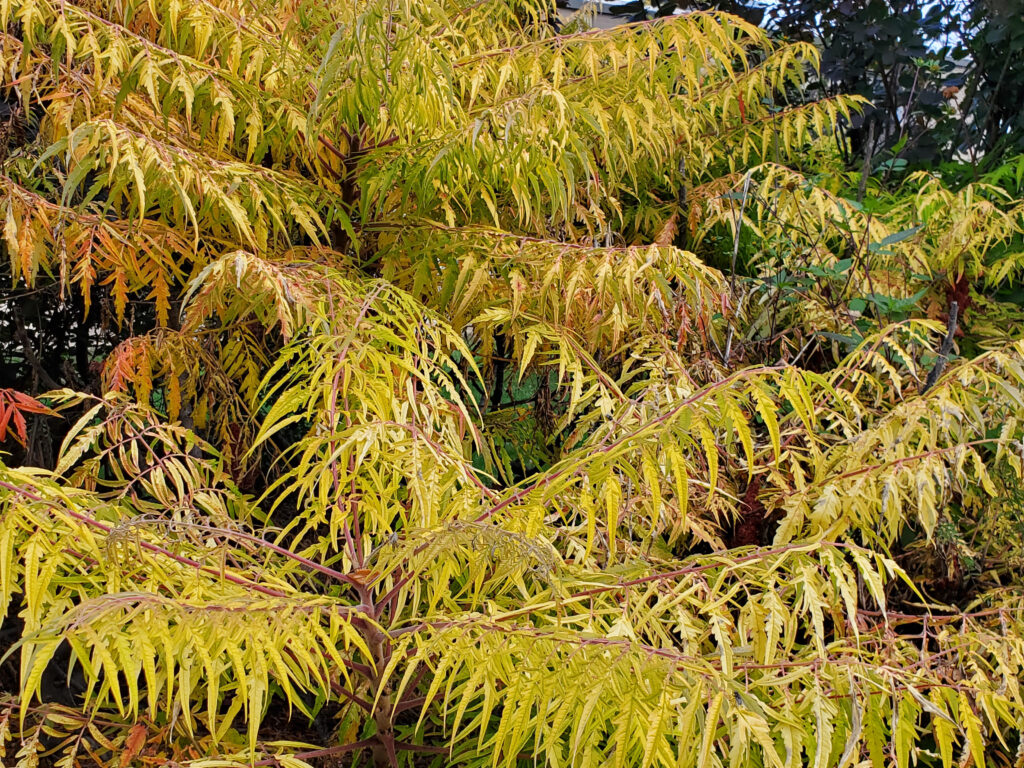
Sumac really put on a show in autumn when their foliage turns brilliant shades of orange, bright red, gold, and crimson. The branches look lovely even in winter when covered with snow.
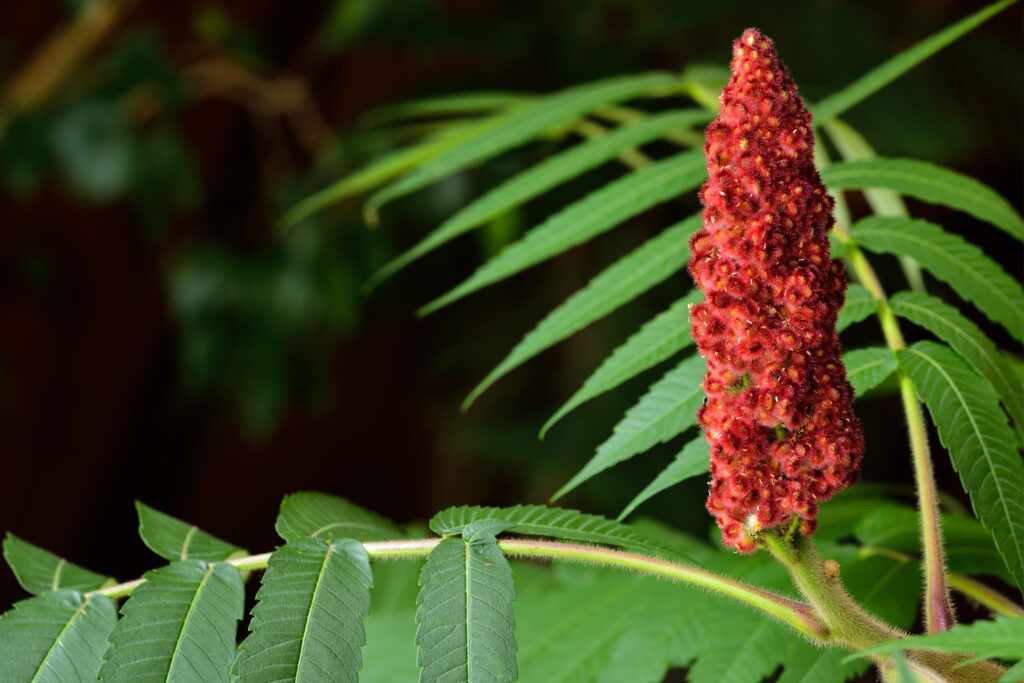
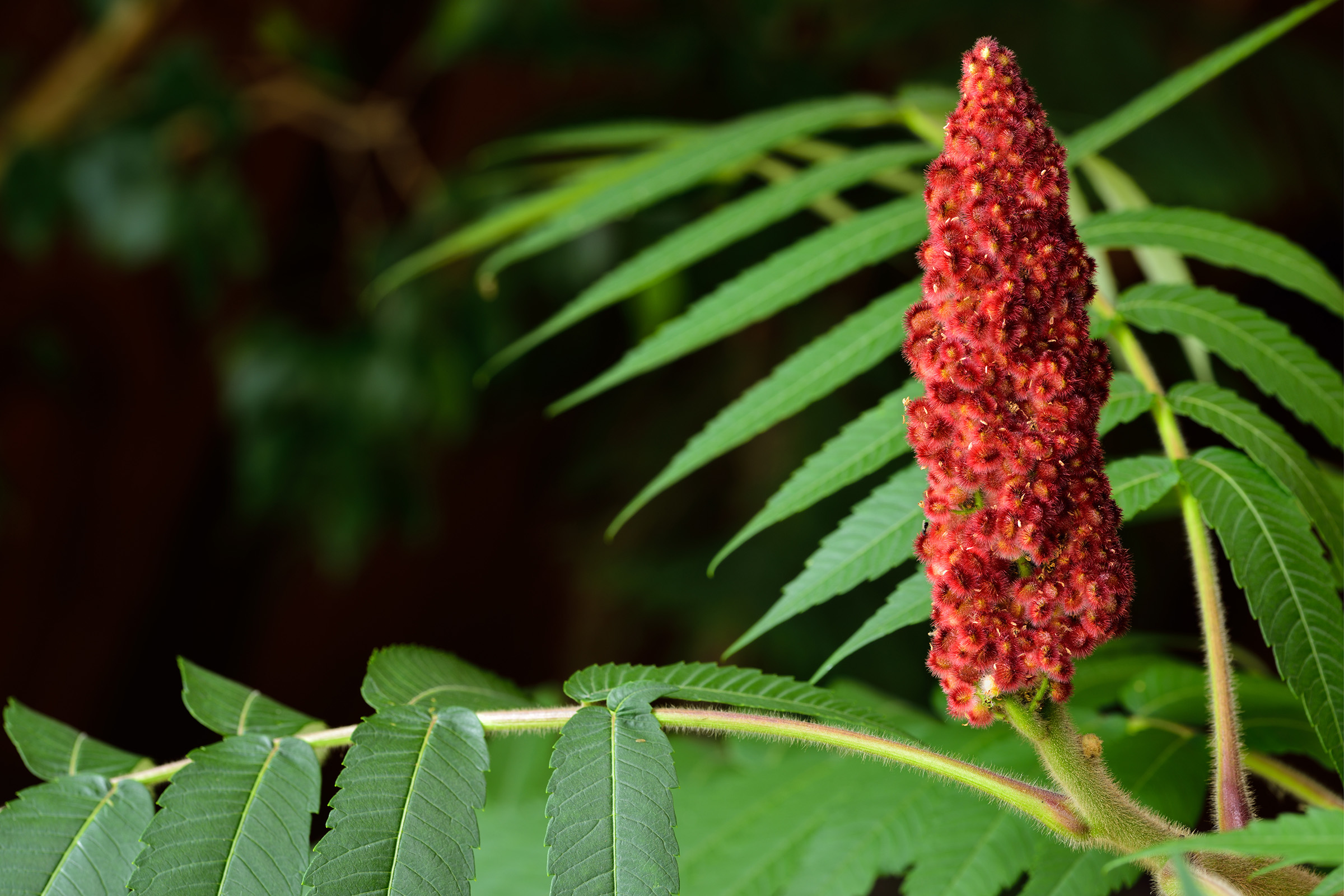
Staghorn sumac is the most familiar. It has fuzzy branches that mimic the velvet on the antlers of deer. Smooth sumac is not as common and does not have the fine hairs on its branches. These plants can grow to 20 feet tall. There are varieties of sumac at garden centers that can add native beauty to your yard. Tiger Eyes® (Rhus typhina ‘Bailtiger’) has golden leaflets that are deeply cut. Penn State says it grows more slowly than the species and is shorter, reaching 6-10 feet. The golden foliage is striking, and in the fall, the leaves become yellow, orange, and intense scarlet. This plant tolerates a wide range of soils and urban conditions.
‘Laciniata’ is another cultivar of the staghorn sumac with leaflets that are finely cut, giving it a feathery, textured look. The Brooklyn Botanic Garden praises this native for its ability to grow as either a large shrub or a small tree, for its long, fern-like leaves, and for the variety of gorgeous colors it displays in autumn. This sumac is so easy to grow, the BBG notes, that it can be found in disturbed environments like highway cuts and along railroads.
Be aware that some plants that are sometimes mistaken for sumac are not in the genus Rhus. Tree-of-heaven (Ailanthus altissima) is sometimes called stinking sumac. It was introduced here from Asia as a large landscape tree, but it is invasive and is also a host for the invasive spotted lanternfly.
Like tree-of-heaven, poison sumac (Toxicodendron vernix) is also not a sumac.The leaflet margins are smooth, not like the toothed leaf margins of sumac, and flowers and fruits are found in clusters on the sides of branches, not the tips. Poison sumac contains urushiol in its sap, which causes skin rashes as it is in the same family as poison ivy. You are less likely to come into contact with poison sumac, however, because it grows only in wetlands.