By Kristina Gabalski
Roses (Rosa spp.) are one of the most popular and well-known flowers. Their history goes back thousands of years in Asia and Europe. Roses can be challenging to grow in the home garden, but the Fox Run Environmental Education Center in Wisconsin says it is possible to grow beautiful roses organically in USDA Zones 5 and 6, which are similar to our USDA Zones here in Western NY.
There are many types of roses, including Hybrid Teas (high maintenance), Floribunda, Grandiflora, Climbing and Rambler, and Miniature Roses. There are varieties of these roses that will grow in our hardiness zones, but selecting one of the easy, very hardy, and disease-resistant shrub roses (such as the well-known Knockout Series) can be the best way to start. Rugosa roses, which are native to eastern Asia, are also extremely tough and hardy, but keep in mind, they can outcompete our native plants and cover large areas with dense thickets.
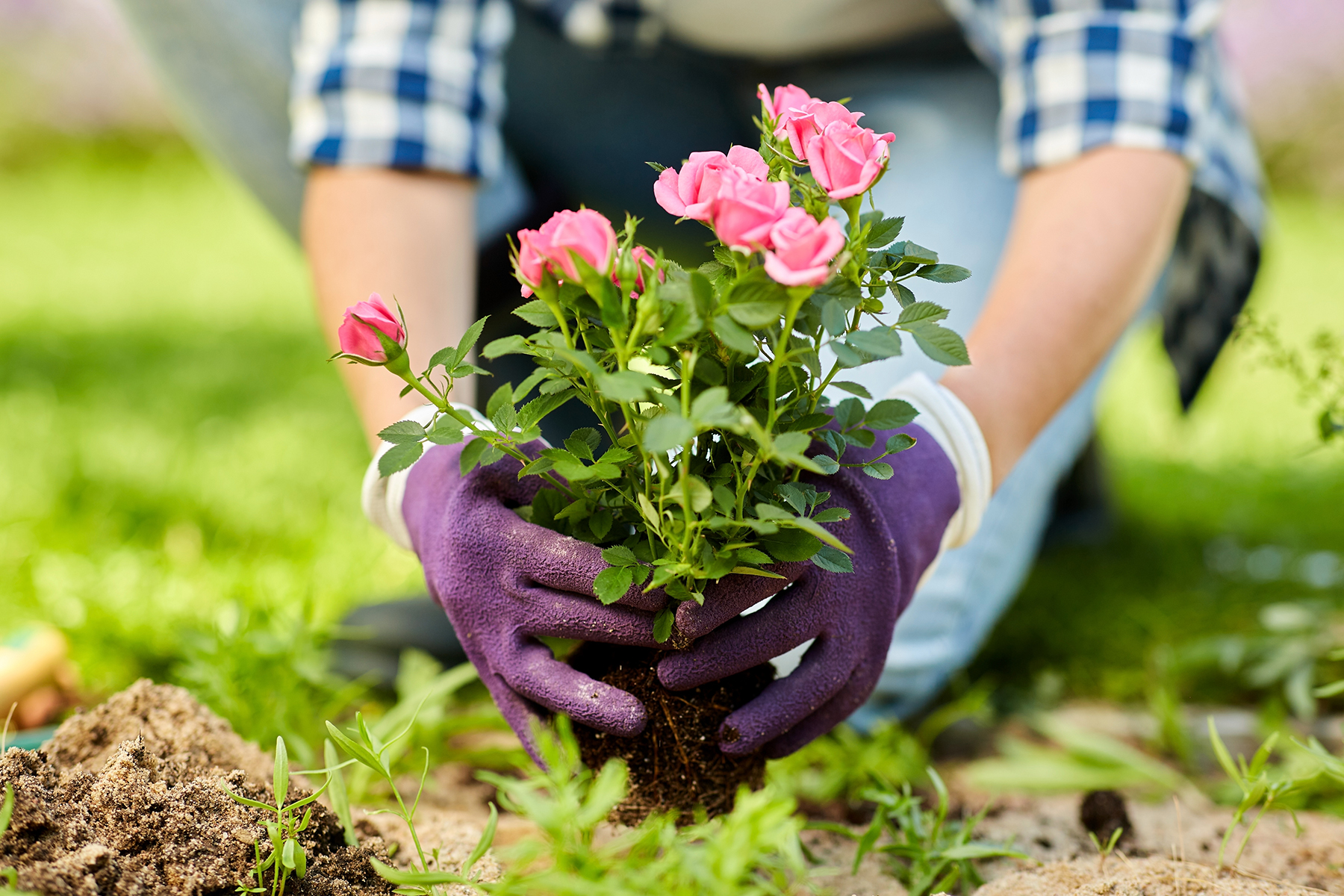
When planting roses, prepare your site properly. Roses need at least six hours of sun each day – ideally morning sun – to help reduce fungal disease pressure. Incorporate organic material such as aged manure or compost into the soil. Your planting site should have good drainage, and your soil pH should be neutral to slightly acidic (6.0-7.0). Good air circulation is absolutely essential, but avoid windy spots as they can dry out plants or damage canes. The graft union – the swollen area where the rose is grafted to root stock – should be at ground level or just slightly below ground level if you are planting in a winter cold spot.
Newly planted roses should be watered deeply and mulched with 2-3 inches of organic material – shredded bark, compost, or straw. It is best to plant roses in spring, but they can be planted up to six weeks before the last expected frost. To protect in winter, build a wire cage around the plant and fill loosely with leaves.
To help prevent fungal disease, water roses deeply and infrequently at the base – avoid wetting the leaves. This also helps the plant develop deep roots for drought resistance. Drip irrigation or a soaker hose is ideal.
For fertilizing, use organic fertilizers such as liquid fish emulsion monthly during the spring and summer. The 2-3-inch layer of organic mulch you have put down will also help to improve the soil as it breaks down. Compost can be placed in the spring and again in mid-summer to help build up healthy soil. Bone meal can be used to encourage strong root development and flower production. Work it into the soil in the spring or at planting time.
Healthy roses need good air circulation to prevent fungal disease. Prune in early spring by removing dead, diseased, weak, and crossing canes. Then reduce healthy canes by about one-third.
Organic disease and pest management begins with healthy air circulation. Fungal diseases such as Black Spot, Powdery Mildew, and Rust can be managed by removing and destroying diseased foliage. Use organic fungicides such as neem oil. Organic sulfur dust or liquid spray can help with rust. For pests such as aphids, Japanese beetles, and thrips, insecticidal soaps or neem oil can be used. Japanese beetles can be removed by hand early in the day. Shake the cane over a bucket of soapy water. Pests can also be combated by beneficial predators such as ladybugs (aphids), lacewings (thrips), or beneficial nematodes, or by applying Milky Spore to soil (Japanese beetles).
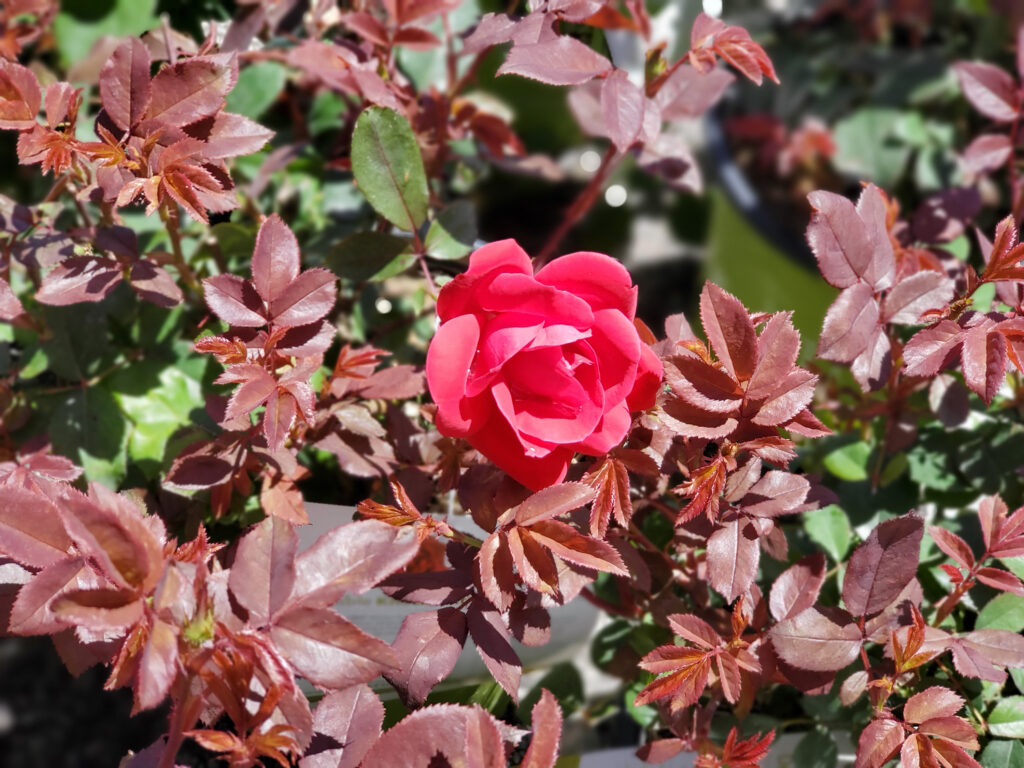
Shrub roses, such as the Knockout Series, are a good place to start when considering roses for your landscape, especially if you are looking to use organic methods for growing and managing diseases and pests. Photo by Kristina Gabalski.