By Kristina Gabalski
This is a very exciting weekend as we celebrate our nation’s 250th Anniversary. I wanted to focus on something history-related for this column and found that gardeners can celebrate their vital role in winning the war for our nation’s independence. While doing research, I found an interesting article from the Penn State College of Agricultural Sciences on the “Revolutionary War and 19th Century Plants and Herbal Remedies.”
It describes the importance of colonists’ gardens, which helped to provide herbal remedies so important for soldiers during the war (1775-1783).
The article cites several history books on the Northern Tier of Pennsylvania and the Southern Tier of New York that describe how colonial gardens and wilderness areas throughout the east helped provide important food, fiber, and medicine for the militia.
According to the State University of New York, the article notes that there were only about 3,500 doctors in the colonies in 1775, and of those, only a few hundred had any medical training at all. The need for medicine for soldiers far outweighed the professional help available. Common ailments included jaundice, diarrhea, respiratory illness, and malaria. Cuts, bruises, fatigue, bleeding, soreness, infection, hunger, and other issues also caused suffering. Additionally, English supply lines were cut off, and patriots had to cope with little medical knowledge and few supplies while fighting a war.
Soldiers were very dependent on the important food, fiber, and herbal medicines that could be found in the colonists’ gardens and farms.
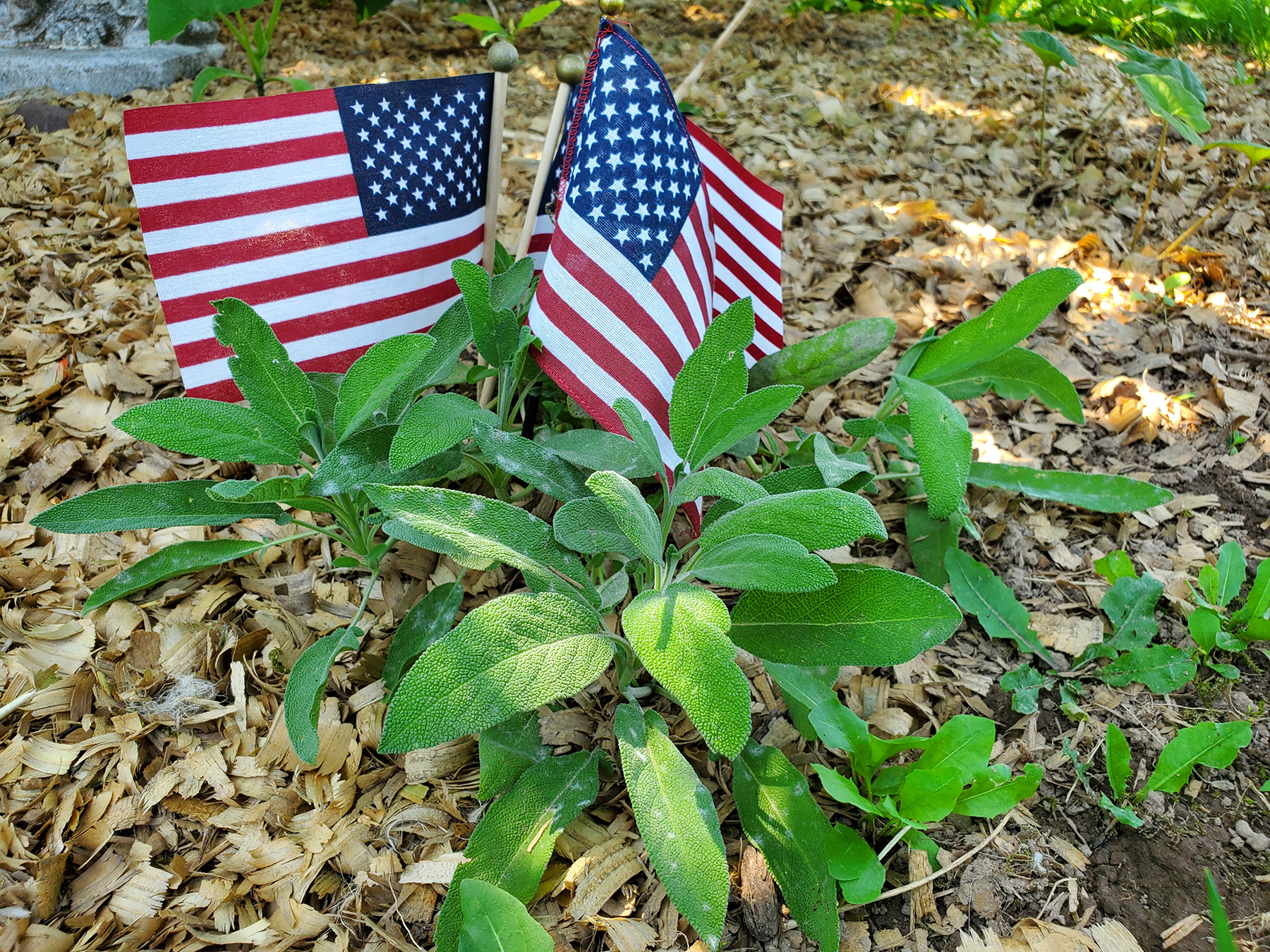
The article says that soldiers would carry herbs with them that helped with their most common afflictions. Herbs such as chamomile, mint, licorice, yarrow, horsetail, and sage. Most colonists had their own kitchen gardens and grew these common medicinal herbs as well as hyssop, lavender, comfrey, and fennel. Vegetables would be grown amongst the herbs, as would flowers.
It is interesting to note that plants now considered noxious, such as garlic mustard, were brought here by immigrants to include in their gardens. Once used to treat leg ulcers, bruises, sores, and colds, garlic mustard is now considered an invasive species, and its aggressive growing habit leads to degradation of wildlife. The article says tansy is another example of a plant brought here in the 1600s with ornamental and medicinal uses, but that has naturalized along the east coast and is considered invasive in some areas.
The colonists likely received help from Indigenous peoples in learning about the medicinal uses of plants native to eastern North America, but they also brought seeds with them so they could continue to use familiar home remedies.
The National Park Service has lots of information online about historic gardens and monuments across the United States. If you are traveling this summer, you may want to include some of them on your itinerary.
The George Washington Birthplace National Monument, located about 40 miles east of Fredericksburg, Virginia, features a colonial revival garden. It is geometrically designed with sections to meet each need of the farm.
The National Park Service states that during the 18th century, growing and caring for a garden was a very important part of life. Everything that could be grown was grown – for beauty, health, wealth, and sustenance. Celebrate your garden this summer and all the beauty and harvests it provides.
Photo: Sage was one of many herbs that gardeners in colonial times provided to soldiers to keep them healthy during the War for Independence. Photo by Kristina Gabalski.