Aside from some varieties of plants that normally have light yellow-green foliage, yellow leaves on plants are not a welcome sight for gardeners. There are many reasons for the yellowing of leaves, and close inspection will help you find the cause and work on solutions.
The Horticulture Program in the Division of Extension/University of Wisconsin-Madison explains that yellowing leaves may simply be a normal way for the plant to shed older leaves as new growth develops. Healthy green leaves have chlorophyll and make life-sustaining energy through the process of photosynthesis. It is normal for a plant to occasionally rid itself of older leaves that are no longer productive to make way for new growth. This happens with indoor and outdoor plants, including annual bedding plants placed in the garden in spring. If the plant is simply cleaning itself of old leaves, you will see very few yellow leaves and the plants will continue to grow.
If many leaves are turning yellow, including new growth, take a closer look. Nitrogen is the main nutrient that keeps leaves green. If you are seeing pale green or yellow leaves, it may be a nitrogen deficiency, and you will need to add nitrogen fertilizer. This applies to hanging baskets and containers as well as in-ground plantings. Make sure to follow label directions, and the University of Wisconsin Extension recommends starting with the lowest suggested rate. You can add more fertilizer later, but you don’t want to risk overfertilizing.
If you see green veins on yellow leaves, it could be chlorosis. This is a challenging problem that affects trees and shrubs and is related to soil pH being out of balance. Iron and manganese are micronutrients that impact the green color in leaves. When soil pH is off, it can make those micronutrients unavailable to the plant, resulting in yellowing leaves. Soil pH levels above 7 can lead to chlorosis problems. A simple soil test can tell you your pH levels. To correct soil pH above 7, amend the soil with sulfur. University of Wisconsin-Madison Extension notes that this is a long-term solution, as it can take a while for the soil amendments to change soil pH. It can also be challenging to cover the entire root system of trees. Another option is finding special fertilizers that provide plant-available iron and manganese.
Chlorosis symptoms may also be caused by other factors. If plants are waterlogged, root damage can lead to yellow foliage. There are additional root and stem problems that impact water and nutrient uptake. These include soil compaction, drought stress, chemical misuse, wilt diseases, insect borers, and physical injury to roots or trunks.
If you are dealing with yellowing foliage on your plants, investigate the cause closely so you can choose the most effective solution.
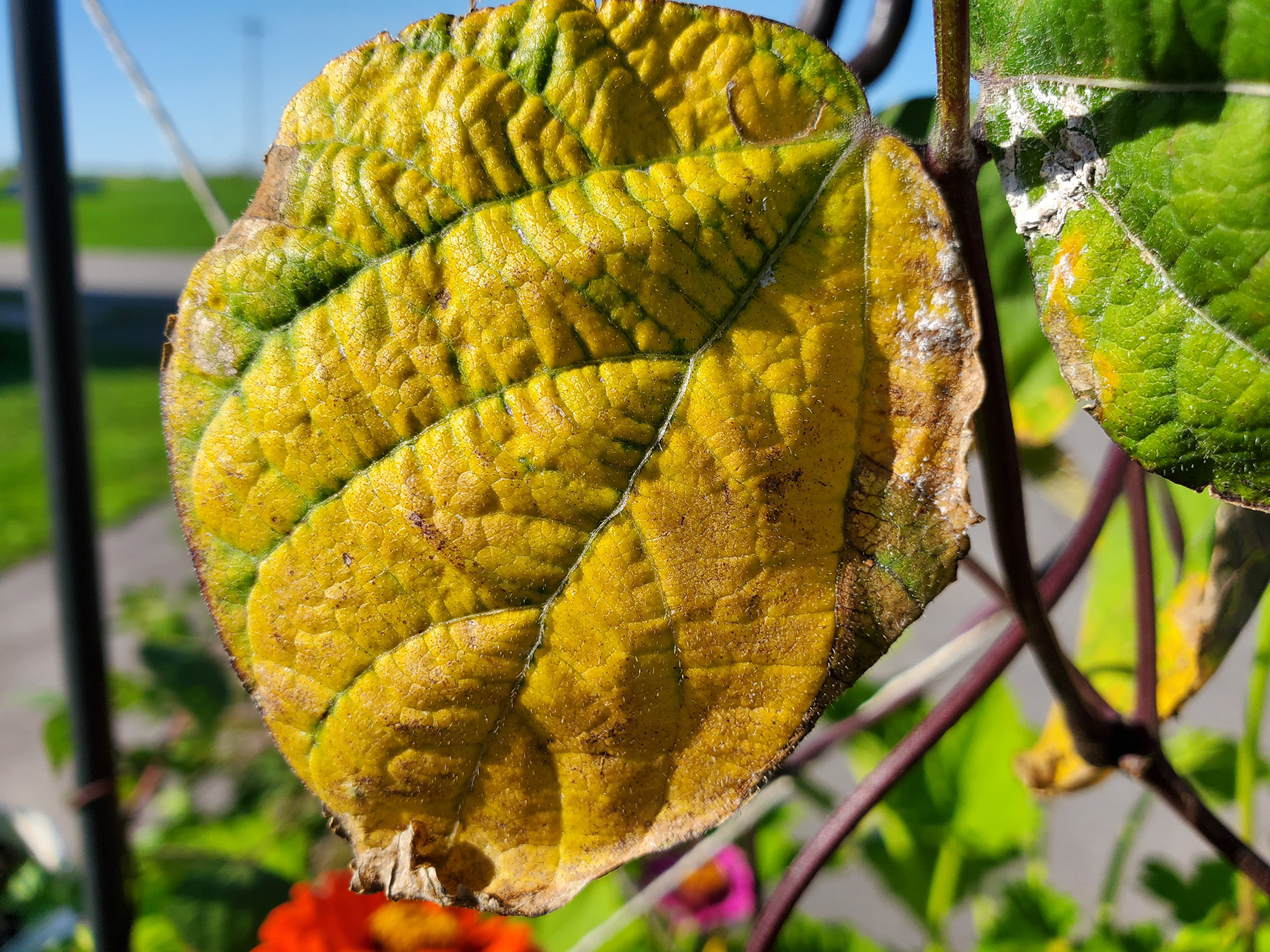
Photo: Yellow leaves are an unwelcome sight on plants. Yellow leaves can have many causes, but nutrient deficiencies are likely to blame. Photo by Kristina Gabalski.