

By Kristina Gabalski
Gaura, Oenothera lindheimeri, is an interesting, shrubby, herbaceous perennial native to southeastern Texas, Louisiana, and Mexico. I have developed a bit of a fascination with this plant since first learning about it only a few years ago. It has performed as a perennial for me, although the University of Wisconsin-Madison Extension describes Gaura as a potentially short-lived perennial which may not overwinter in cold regions.
I planted Gaura for the first time in 2025, and it has done well in the sunny spot where I planted it – between our house and an outbuilding – giving it a somewhat protected environment. I had seen the plant in gardening magazines and was intrigued by its bushy growth habit and the darling little blooms that appear to float over the garden.
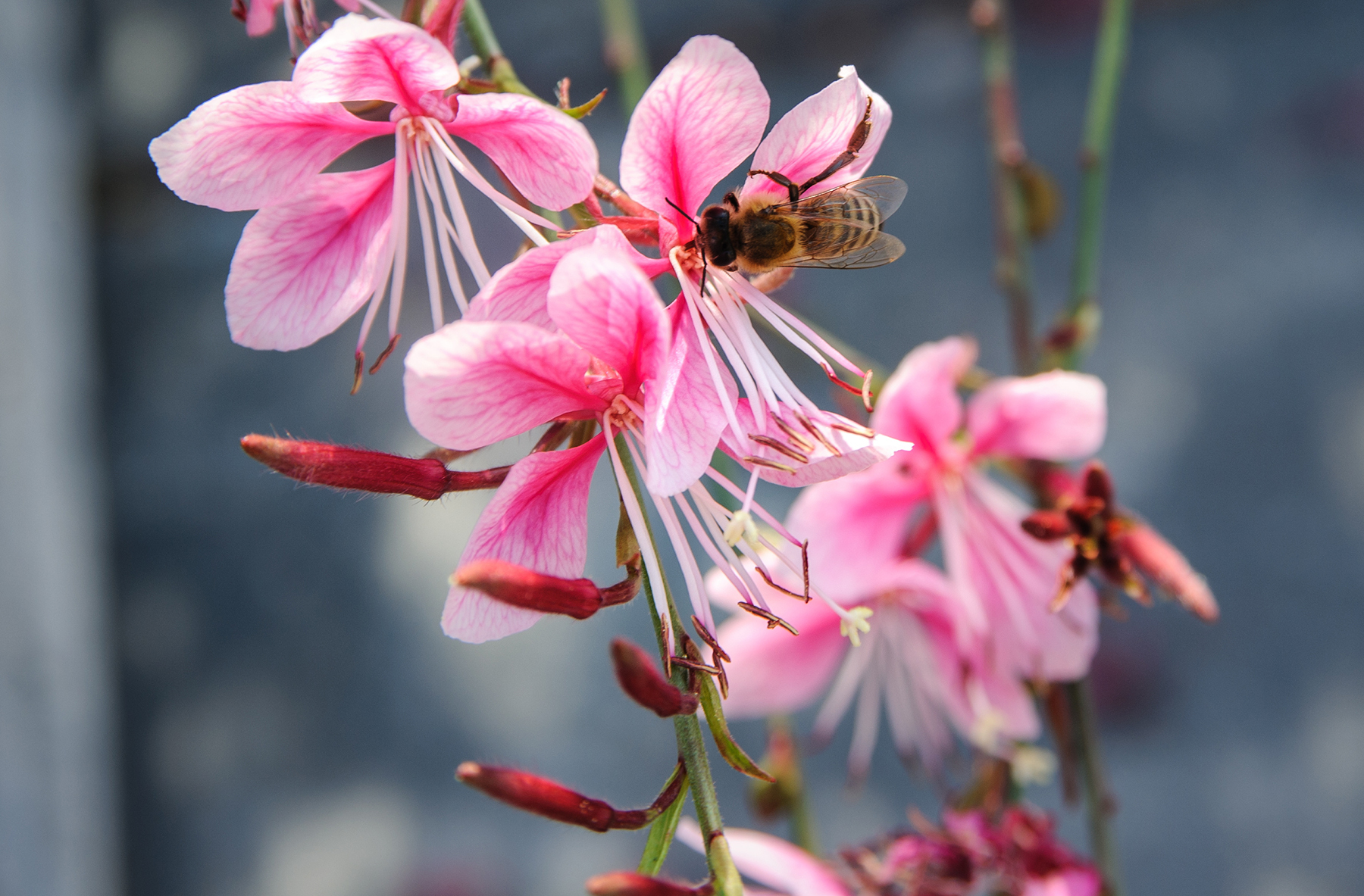
I have not been disappointed, and this year added a pink variety to go along with the two white-flowered selections that had been in place for one year. According to UW-Madison Extension, Gaura has very few insect or disease problems, and I have found that to be true. It is a host plant for the caterpillars of the white-lined sphinx moth and attracts bees, bumblebees, and butterflies.
In more formal plantings, the loose, see-through effect of these plants may not be desired, but large plantings of Gaura are very striking. The blooms continue from early summer through fall. Mine are still going strong as we head into November. The plant provides textural contrast and looks great growing above my catmint and other herbs. It also pairs well with brown-eyed Susans, purple coneflowers, asters, and native grasses.
University of Wisconsin-Madison Extension says Gaura likes full sun and light soils but will tolerate clay. It needs well-drained soil and does well in hot summers. It will tolerate drought, but blooms better with adequate moisture. It is recommended that you water and fertilize sparingly to promote flowers and more compact growth. Removing some of the flower stems can help tidy the plant, encourage more blooms, and reduce self-seeding, but I love this plant’s easy-going nature. It makes me smile when I see the blooms dancing in the late-day sunlight.
University of Wisconsin-Madison Extension notes that rich soils may cause the flower stems to become more leggy and to flop – which can also happen if the plants are in too much shade. Late spring is a good time to shear the plants back to about half their height, if desired, to keep them smaller.
Gaura forms a basal clump of leaves from a woody tap root. UW-Madison Extension notes the leaves are lance-shaped and may be irregularly toothed. Some leaves are wavy. The dark green and sometimes burgundy colored foliage dies back to the ground in winter and emerges slowly in the spring.
Flower stems can grow up to four feet tall and have clusters of small flowers that open sequentially along the stems. Each flower has four petals surrounding eight long yellow stamens, with petals directed slightly upward. UW-Madison Extension says most species have white or pink-tinged flowers. Named cultivars may have more intensely colored petals. After blooming, the flowers drop to the ground, leaving the stalk clean.
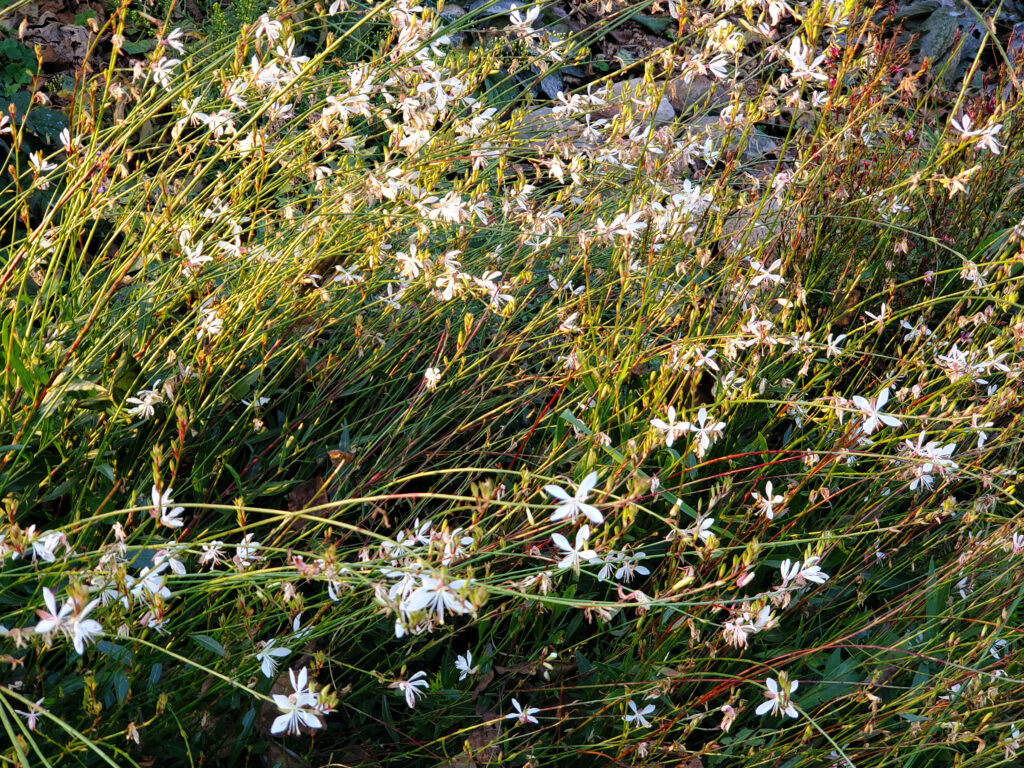
White Gaura blossoms catch the late afternoon sun in autumn. Photo by Kristina Gabalski.
Bees are attracted to Gaura. AdobeStock photo.


