

By Kristina Gabalski
What do you have growing beneath the trees in your yard? Is it grass? Or do you have plantings that surround trees?
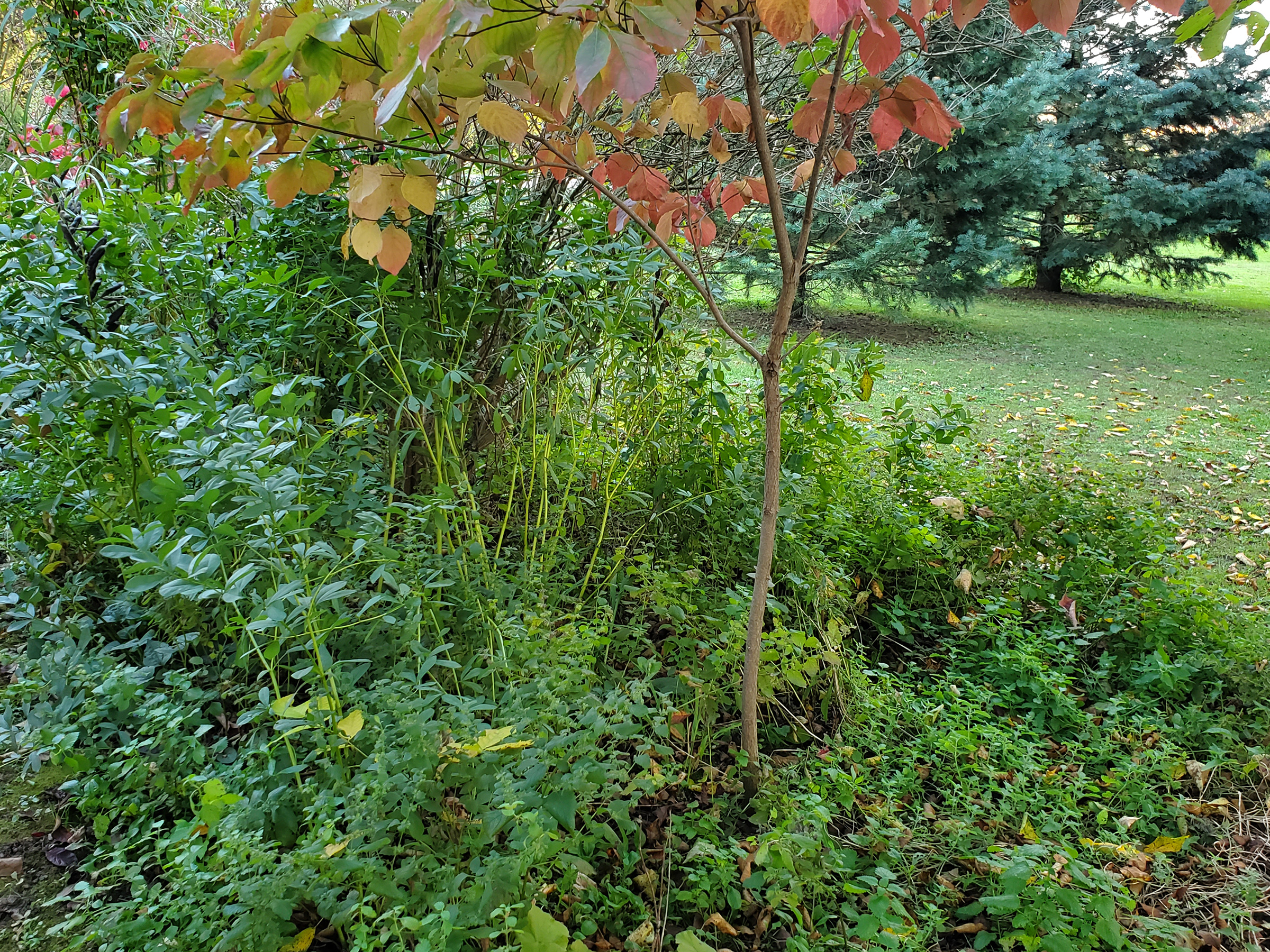
Master Gardeners at Penn State University Extension say grass and mulch below trees do little to help insects and pollinators. They say a “soft landing” below tree canopies filled with native, shade-loving plants creates a habitat for insects, including pollinators. That’s because many moths and caterpillars need to hide under a protective cover of leaf litter and decaying plant material (duff) to complete their life cycles, which begin in the tree canopy, where they feed on leaves.
The idea of a “soft landing” zone below trees was conceived by Leslie Pilgrim, a conservation gardener, and Heather Holm, a biologist, pollinator conservationist, and award-winning author.
“Soft landings” protect insects from lawn mowers, weed trimmers, and even some predators. Insects that spend part of their lives in the tree canopy can easily access the protection around the bottom of the tree, and other insects such as beetles, lacewings, bumble bees, and fireflies benefit from these areas as well.
Additional benefits include reduced soil compaction around the base of the tree and less accidental damage from trimmers.
Combine this concept with native plants and keystone trees such as oaks, willows, cherry, or pine, and you have a mini ecosystem that allows beneficial insects and pollinators to thrive. This is because keystone trees host a larger variety of insect species compared with non-keystone trees, Penn State Extension Master Gardeners say. They cite the National Wildlife Federation, which notes that oak trees can host over 952 caterpillar species.
If you want to create your own soft landing, try picking a spot under an existing native tree. You can also consider planting a keystone tree and building the area around that. If there is turf around the tree, Penn State Extension advises placing cardboard over the area and topping with leaves and branches. Plant through holes made in the cardboard at least three feet away from the trunk. Plant between there and the edge of the dripline – where overhanging tree branches end. Use smaller plants and plugs so you don’t damage tree roots or raise the bedding area.
Adding extra soil or compost is not recommended, as that can suffocate the tree’s root system. In the fall, rake leaves into the “soft landing” area to build up a layer of duff for insects looking for a place to hide.
Native plants are suggested to help attract pollinators. Possibilities include red columbine (Aquilegia canadensis), which blooms from late winter through August. Spotted geranium (Geranium maculatum) is another native plant that blooms throughout spring. Native sedges and ferns are great shade-loving options, as are Solomon’s Seal, Early Meadow Rue, May Apple, Virginia Bluebells, and native violets.
Gardeners also benefit from soft landings. Planted areas around trees can make yard maintenance and mowing easier and offer an attractive way to add native and shade plants to your yard.
Placing plants around the base of trees can be a boon to beneficial insects in your yard. Photo by Kristina Gabalski.


