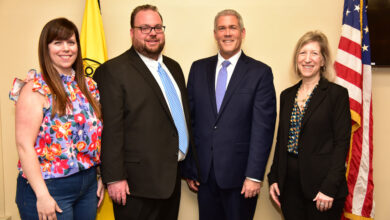
Karen Bunker on Marian Devotion and the Rosary
By George Cassidy Payne
I first came to Karen Bunker through her daughter, Kim, a personal friend, former AmeriCorps colleague, and someone I have long admired for her writing and literary sensibility. I had reached out to Kim while reporting a piece on Marian apparitions, knowing she had studied at Notre Dame and now lives in Peru. She responded with generosity, saying the topic was compelling but not something she felt she could speak to directly. Then she added, without hesitation, that her mother would be the right person to talk with. So, I did.
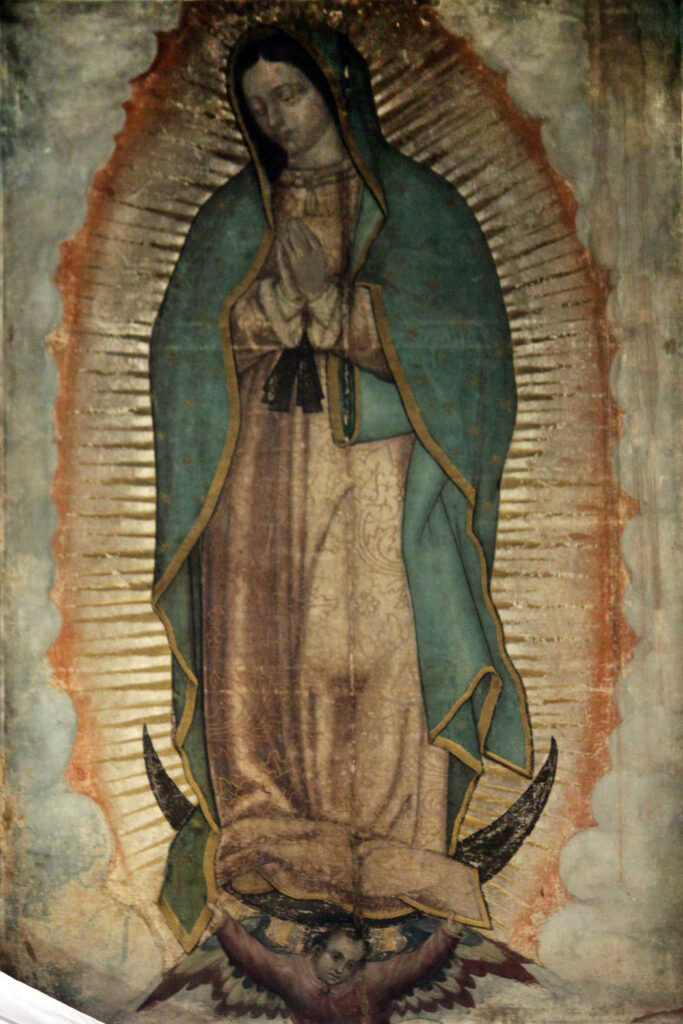
In Catholic tradition, a Marian apparition refers to a reported supernatural appearance of Mary, the mother of Jesus, to one or more individuals. Such claims are not automatically accepted as fact; they are carefully investigated by Church authorities, and only a small number are ever formally recognized as “worthy of belief.” Even then, Catholics are not required to believe in them. Among the most widely known are Our Lady of Fátima, Our Lady of Lourdes, and the ongoing reported apparitions at Medjugorje.
There are people who speak about faith as though it were an argument to be won. Karen Bunker speaks about it as something lived, daily, bodily, quietly repeated. For more than three decades, she has helped facilitate a Rosary group rooted in contemplation, pilgrimage, and communal prayer. Her spirituality has been shaped by Marian devotion, especially the apparitions associated with Fatima and Medjugorje, but also by ordinary acts: driving on the expressway with beads in hand, writing reflective emails to her children during Advent, praying beside the sick, and witnessing what she describes as transformation through suffering and ritual.
What emerges in conversation with Bunker is not spectacle or abstraction. It is persistence and attention. A worldview in which mystery and practical life coexist without contradiction.
“I would say it started with my grandparents,” she says. “I always remember them with rosaries in their hand.”
Her grandparents lived across from Holy Rosary Church in Rochester. Her grandfather was blind.
“He could see light a little bit. We always sat in the same place in church. My grandmother always prayed the rosary. My grandmother would pray the Stations of the Cross. Friends would come to her with prayer requests. She would stay up late at night until she finished the stations. She was always keeping track.”
Those memories became the spiritual grammar of her childhood. Marian devotion deepened later, after she and her husband traveled to Medjugorje — a site associated with the ongoing reported apparition tradition of Our Lady of Medjugorje, often referred to as The Gospa or Queen of Peace, which began in 1981 and continues to the present — in the years following the Balkan War.
“The trip to Medjugorje was magical and very inspiring,” she says. “I started doing a daily rosary at that time.”
Since then, the rosary has become less obligation than rhythm. She prays while running, while driving, and in moments of anxiety or uncertainty. The repetition becomes a kind of structure for attention.
“I love the meditations,” she says. “I try to do the four sets of mysteries. I will run while I do it. I concentrate on different things that may come to me. I find that things come to me when I pray. I have to pause and ask: Is that me, the Holy Spirit, or Mother Mary? I feel a presence.”
The question hangs there, unresolved and sincere.
“I will ask her to comfort me, and you will get an answer. You get comfort and insight.”
For Bunker, Marian devotion is not detached from ordinary relationships. During Advent and Lent, she sends each of her children daily reflective emails, drawn from prayer, memory, and what she is reading.
“If I pray to Our Lady and send off that insight, I will do that during the rosary,” she says. “I will send them something that I want them to hear.”
The modern secular imagination often reduces Marian apparitions to symbols: prophecy, miracle, warning. Fatima in particular is frequently flattened into spectacle — the sun miracle, the three secrets, apocalyptic interpretation. Bunker speaks about these events differently, as openings rather than conclusions.
“I think everyone is going to have a chance to review their life,” she says. “I believe that one of the secrets is that there will be an apparition for everyone to see.”
Whether taken literally or not, what matters to her is transformation.
She recalls pilgrims she has encountered whose lives seemed visibly altered by the experience.
“At Medjugorje, I remember a mother bringing her daughter. She was dressed in all black. She had this negative energy around her. I guess you would call her goth. They brought her there to ask for help. By the end of the pilgrimage, she just lightened up. She did the Stations of the Cross to the top of the mountain on her knees. We saw that transformation.”
There are other moments she recounts more reflectively.
“I pray the rosary in the car while I am driving,” she says. “There was this one time. I think there may have been roadwork. I was on the expressway. All the traffic was stopped. I had the rosary. I was praying it, and the beads started to beat. That rosary started to beat. That was the first time anything like that happened to me, and I will never forget it. I gave that rosary to my mom. I wasn’t doing it. It was happening to the beads.”
She pauses.
“I do not know how people get through the day” without prayer.
Bunker’s relationship to faith is notable in part because it is not presented as an alternative to science, but as something parallel to it. Trained in biological sciences and project management, she spent decades in laboratory work. For her, scientific inquiry and religious belief are not competing systems but different ways of attending to reality.
“You have to have faith,” she says. “That is the gap between what you are seeing and what you are hearing. That leap has to come in here.”
Then she turns to the natural world.
“If you look at an eye or a hand, or look at a cell — we have such a simplified version of a cell. When you look at the high-tech pictures of the cell, it’s like, oh my gosh, how can you not believe? There is no other way.”
“It is so easy for me to believe in science and in God.”
At the University of Notre Dame, she says, theologian John Dunne helped shape her intellectual and spiritual formation.
“There were Masses in every dorm. There was a lot of Catholicism if you wanted it. It was easy to keep my faith there. I grew up with it.”
Her spirituality is also deeply communal. Since June 1995, the Rosary group she helps facilitate at St. Lawrence Church in Greece has become a steady monthly gathering.
Rosary Group
This ministry began in June 1995 at St. Lawrence Church in Greece. When the group first began, members gathered in rotating locations, including private homes and the Padre Pio Chapel in Gates. Since the Covid pandemic, however, the group has met permanently in Deacon Hall attached to St. Lawrence Church so participants can easily walk over together following the 9:30 a.m. Sunday Mass. Each meeting begins with about 45 minutes of social time, followed by the communal praying of the Rosary of the Season, such as the Sorrowful Mysteries during Lent.
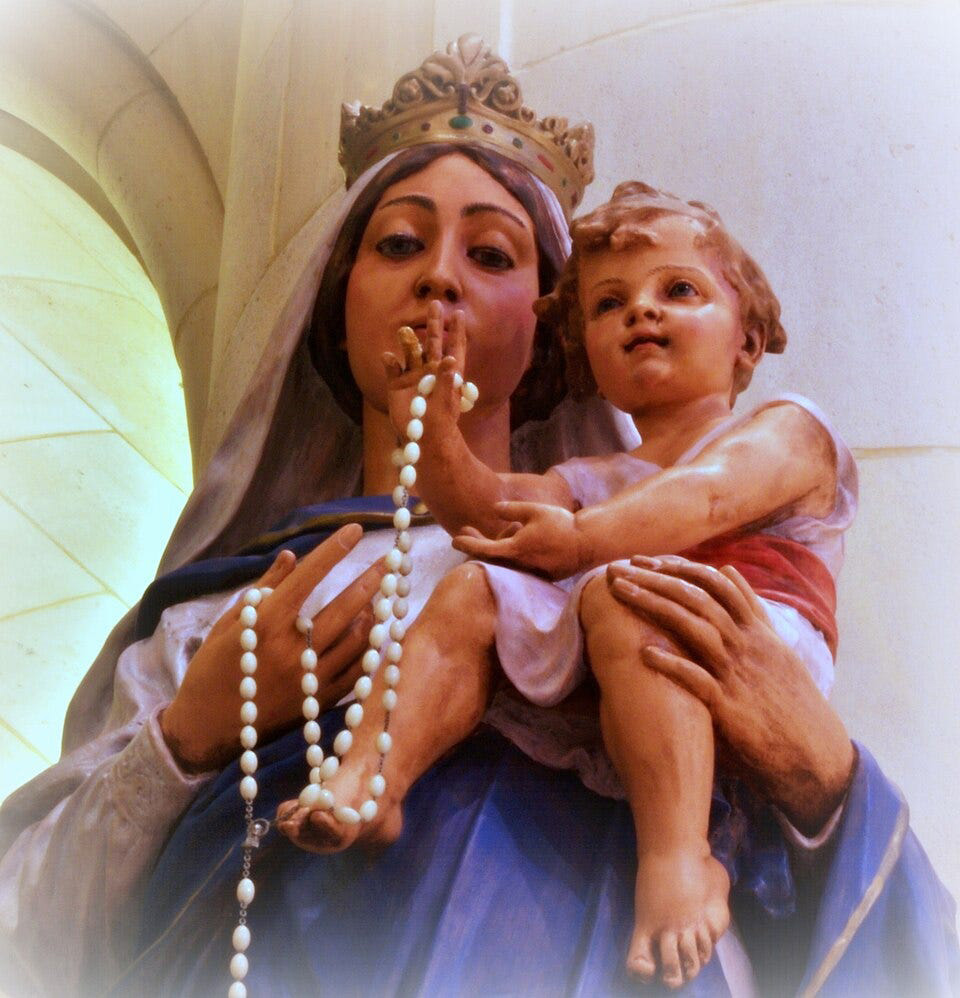
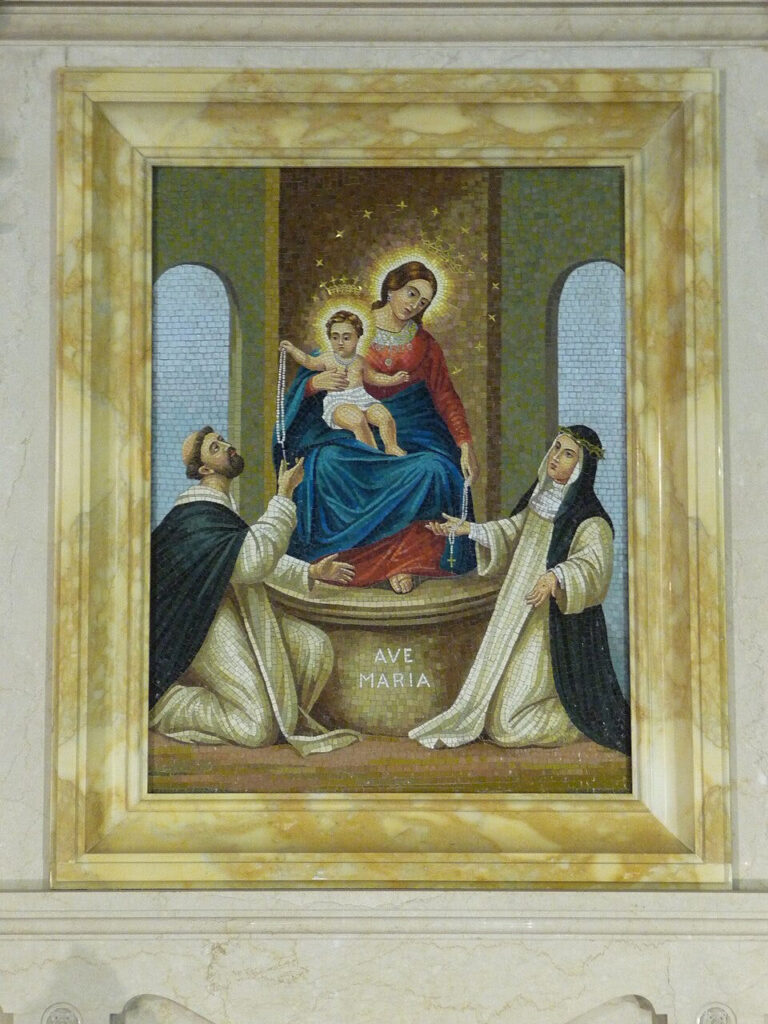
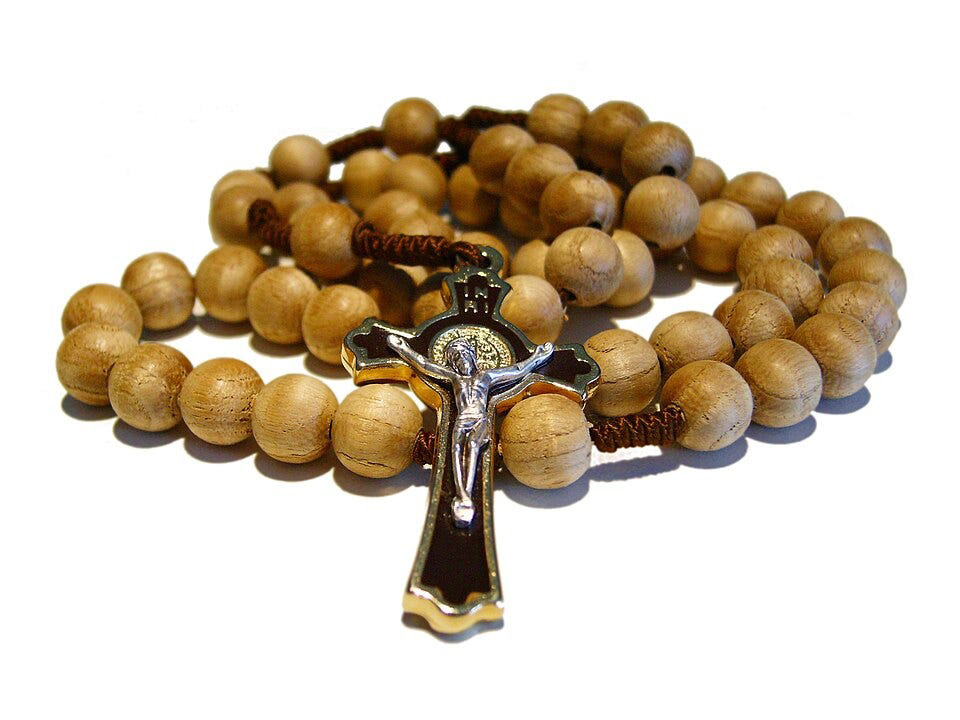
The rosary itself is a structured Catholic prayer using beads to guide repetition of the “Our Father,” “Hail Mary,” and “Glory Be,” while meditating on key mysteries from the lives of Jesus and Mary. It is designed as both repetition and contemplation.
Membership is open to all ages, and families are encouraged to participate. The group currently includes more than 50 members. Attendance is flexible, and participants join as they are able. The monthly commitment is about 1½ hours. No prior experience is required, and newcomers are welcomed and guided through the prayer.
In one instance years ago, the group was contacted by someone from Zambia seeking to join in prayer. That connection developed into ongoing correspondence with Cornelius, who continues to share updates and prayer requests. Through links with the Power of Love Foundation, the group helped support mosquito net distribution to prevent malaria in his community.
For Bunker, prayer is not withdrawal from the world. It is a way of entering it more fully.
That sensibility extends into how she understands suffering. Fatima emerged in a moment of war and global instability, and Marian apparitions often surface in periods of collective uncertainty. Yet she resists sentimental readings.
“Because we are on earth and not heaven,” she says. “The Catholic Church has an answer for suffering. If you look at a crucifix, it is suffering. That is our cross, and it will be heavy. We can get through it.”
She invokes St. Teresa of Ávila.
“In this life our lot is not to enjoy God, but to do his holy will.”
She returns to Christ in Gethsemane: “Not my will but your will. If you can do that every time, it is easier.”
There is no promise of escape, only endurance and meaning carried within endurance.
Bunker often returns to the image of seeds: faith unfolding slowly, relationally, without coercion. She describes her cousin Richard, who uses a wheelchair, and his Muslim aide, Paul, who has gradually become more curious about Christianity through shared conversations and Bible study.
“It is slow,” she says. “You cannot just have one conversation. You plant a seed.”
Marian devotion, in her telling, is not primarily about certainty. It is about attentiveness to moments, to people, to what she understands as grace moving quietly through ordinary life.
Asked whether modern audiences would believe the children of Fatima if the apparitions occurred today, she resists the premise of disbelief.
“People did not believe them then,” she says. “Even in Christ’s time, people did not believe. There would be people who would believe and people who would not believe.”
“The same thing happened back then.”
Faith, for Bunker, is not secured by consensus. It is sustained through repetition: rosaries worn smooth by time, pilgrimages climbed on knees, prayers spoken in cars and kitchens, and conversations carried patiently across difference.
Not proof.
Karen Bunker is a retired project management professional with more than two decades of experience in clinical trials and environmental laboratory operations. She worked as a Clinical Trials Project Manager at ACM Global Central Laboratory (2016–2020), and previously spent 16 years at Columbia Analytical Services (1996–2012) and four years at ALS Environmental (2012–2016), managing complex client sampling programs and laboratory workflows. She holds a Bachelor of Science in Biology from the University of Notre Dame.
George Cassidy Payne is a freelance journalist, poet, and essayist based in Rochester, New York, whose work explores the intersections of culture, politics, spirituality, and everyday life in Upstate communities. He is a contributor to CITY Magazine, 585 Magazine, Life in the Finger Lakes, and other regional and national outlets.