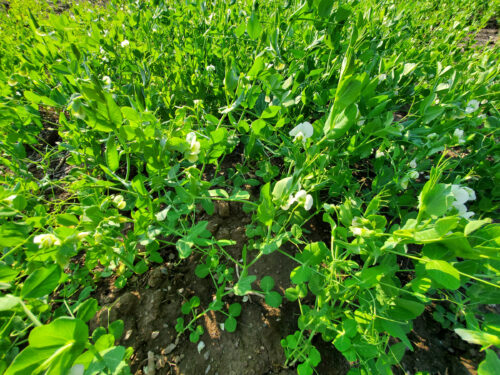
Summer is officially here, but before the gardening season progresses, I want to focus on another early-season vegetable crop – peas. June is the time to find fresh, locally grown peas in farmers’ markets, and it is also the time to harvest in the home garden.
Common types of garden peas include shelling peas, snow peas, and snap peas. Shelling peas are peas that are removed from the shell before eating. Snow pea pods are thin and tender and eaten when there are only tiny traces of peas inside. Sugar snap peas are eaten when the peas inside are almost mature, but the pods are tender and juicy.
University of Minnesota Extension says pea vines are also edible; simply steam or sauté the tender shoot tips.
Peas do well in most soils, from sandy to heavy clay, the University of Minnesota Extension says, but the growing area must be well-drained. Peas prefer a pH between 6 and 7.5. You can use well-rotted manure or compost to enrich the soil when planting.
Pea growing season in our area can be short. UME says most varieties need about 60 days from planting to harvest. Once temperatures get above 85 degrees F, peas will stop growing and producing flowers or pods. Additionally, peas produced in hot weather can also be of poor quality. Plan on planting your pea crop early – even preparing the planting spot in the fall.
You can plant peas as soon as the soil can be worked in the spring. If you are growing a tall, vining variety, make sure to provide a trellis. Seeds should be placed in a shallow trench, six to seven inches apart, University of Minnesota says. Keep seeds at a uniform depth and cover with one inch of soil. You can plant seeds in succession, one week after another, for about three weeks.
Once peas have germinated, they can survive a light frost. They will grow when temperatures are above 40 degrees F. The best temperatures for pea growth are 55 to 65 degrees F. If frost occurs after plants have started to flower and set crop, the plants can be damaged, so make sure to cover them with sheets or row covers.
To conserve soil moisture, you can mulch peas with grass clippings, straw, or other organic materials.
Harvest time for peas is crucial. University of Minnesota says to watch the pods carefully once they fill with peas. Sample each day and harvest as soon as the full size is reached when the peas are sweet and tender. Once peas are mature, they will decline in quality rapidly – in as quick as three days, they will not be edible as fresh peas.
The University of Minnesota recommends chilling shelling peas immediately after harvest by dunking them in very cold water until chilled. Dry them and then refrigerate. Once the peas are cooled, they will stay fresh in your fridge for more than one week.
Snow peas should be harvested after the pods have reached their full length as described on the seed packet. Peas should be visible as only small traces. Some varieties have fibrous strings along the edge of the pods, which must be removed before cooking. Again, cool the snow peas quickly after harvest.
For sugar snap peas, watch pods carefully. Harvest when peas and pods are still sweet, juicy, and tender and pods appear almost full of peas. Again, cool the peas after harvest. Some varieties have strings that should be removed before cooking.
Pea plants can be turned into the soil after harvest, and you can plant a second pea crop for fall harvest.
The University of Minnesota says that to harvest pea shoots for use in stir-fry or steaming, cut six-inch lengths of vine. Edible pod varieties are especially good for harvesting shoots.