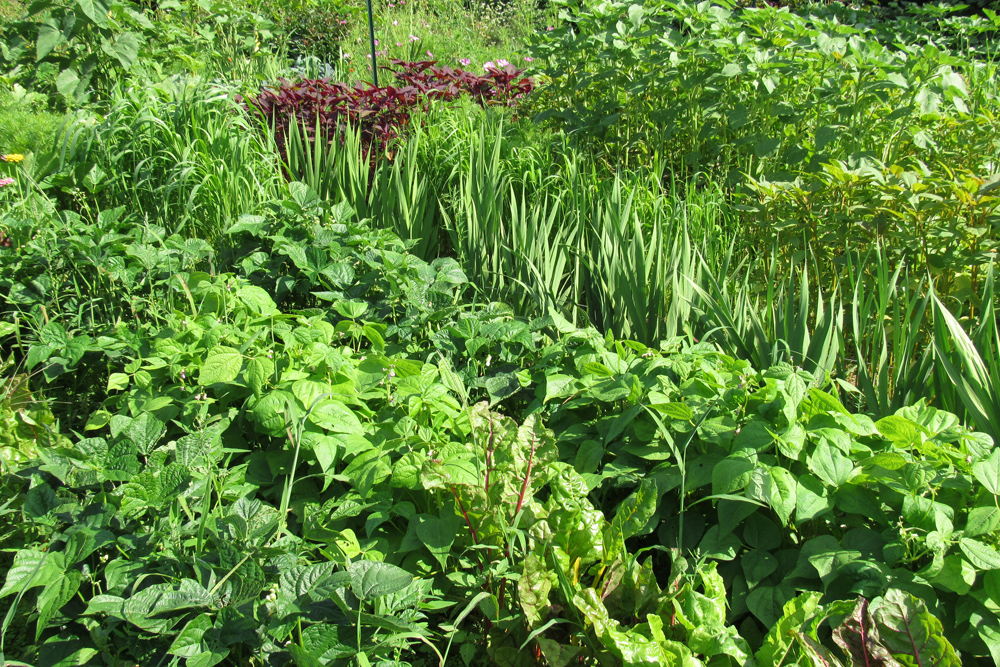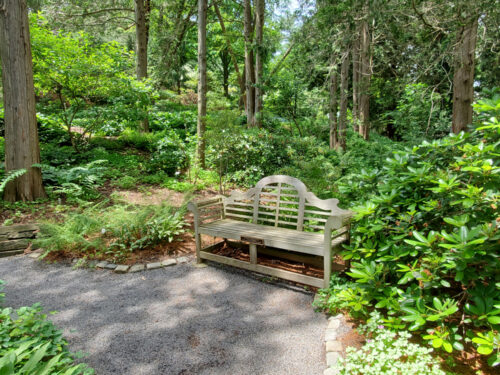
Gardening is hard work, but the garden gives us so much in return – food, flowers, beauty, and more. It can even be a restorative place for healing. Healing gardens have a long history, including Japanese Zen gardens and monastic cloister gardens. Hospitals, healthcare facilities, and public gardens often include healing gardens for visitors, patients, families, and staff. In his novel, The House of the Seven Gables, Nathaniel Hawthorne uses the garden as a space where characters can heal. There are healing gardens for veterans and those suffering from post-traumatic stress. Healing gardens can be a place for those recovering from serious illnesses like cancer or stroke.
According to Penn State Extension, research shows that connecting with nature helps lower blood pressure, decrease heart rate, reduce stress, and improve mood.
Penn State categorizes healing gardens into two types: restorative, which offer benefits simply by walking or sitting in the garden, and enabling gardens, which create therapeutic effects when one is actively engaged in gardening.
Think about your goals and the health concerns in your family as you plan your healing garden. You might want to reduce stress, eat healthier foods, or create a garden that makes maintenance easy for older members of the family. This could mean growing fruits, vegetables, and herbs, or utilizing raised beds.
Hardscape is the first consideration when planning the garden, and includes paths and patios. Think of the space as an outdoor room and consider walls or plants for privacy and shade. If someone with a wheelchair will be using the garden, create paths that are wide enough and made from a hard, smooth surface. Water, sound, and lighting are important. You can use a simple rock bubbler, Penn State says, or consider a pond or waterfall if you have the space. The sound of water helps with relaxation and contemplation. Wind chimes and grasses can add sound, and there are many options available for adding light to your garden. LED lights can be used to feature special plants. Simple string lights can be run through trees and arbors to create a welcoming spot in the evenings.
Encouraging birds and insects creates a healing energy. Bird houses, birdbaths, bird feeders, and plants that provide nectar and food will bring beautiful birds and butterflies into your healing space.
Seating is very important. Benches or lightweight chairs can be easily moved about the garden, and a hammock or glider are additional options. Penn State says outdoor carpeting can be used to create a welcoming, comfortable spot.
As in any garden, focal points are important. In a healing garden, you might choose a statue, a special plant, or even interesting rocks. Penn State advises that brightly colored objects and unnatural garden art can take away from the therapeutic effects of a healing garden.
Select plants that you like and are well-suited to the space. Using large groupings of fewer varieties of plants can make maintenance easier and give a sense of serenity and unity.
Other considerations in a healing garden include plants that evoke pleasant memories. If you loved hollyhocks as a child, plant them in your healing garden. Favorite childhood plants can also benefit those with dementia, according to Penn State.