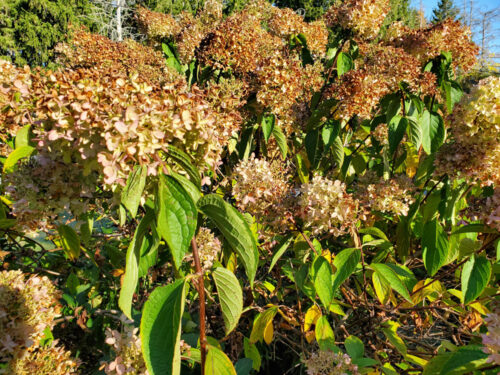
This has been a difficult growing season. Drought conditions have been a challenge for weeks. I have never seen it this dry. I have worked to prioritize watering to keep important plants and crops going, but even watering doesn’t seem to be helping much anymore. As I write this column, some rain is in the forecast. Still, I have been wondering how the stressful growing season for plants will impact their ability to survive the winter.
The University of Massachusetts explains that the amount and frequency of rainfall received during the growing season are more significant for plant growth and health than the total amount of precipitation in a given year. A drought year is defined by the pattern and frequency of rainfall rather than the total amount of rain. Plants need water for life functions, growth, and to help fight off disease and insect damage. Without sufficient rainfall, plants can suffer long-term effects for years, according to the University of Massachusetts.
Penn State University Extension says the best way to handle drought conditions is to plan for them.
Being proactive about practices to conserve water is known as xeriscaping. It includes grouping plants with similar water needs, adding organic material to the soil, using mulch to conserve soil moisture, utilizing rain barrels, rain gardens, and irrigation systems, and selecting plants that tolerate drought conditions, according to Penn State.
Plants that have drought resilience can be broken into two groups: drought evaders or water conservers. Drought evaders are plants that will enter dormancy to avoid less-than-favorable conditions of mid-summer. Spring-flowering bulbs and woodland wildflowers are examples of these.
Cool-season turf grasses also go dormant during dry spells and come back to life when rain and cooler temperatures return. Trees can enter dormancy by starting to drop leaves to conserve water and nutrients.
More helpful to gardeners are water conservers, which have leaf, root, and plant characteristics that minimize moisture loss, according to Penn State.
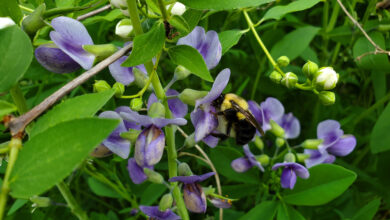
Plants with deep taproots are an example. My Baptisia has held up well this summer, and that is due to its taproot. Thick fleshy roots – like those of daylilies – can help, although my daylilies looked pretty rough by late July. Succulents like sedums have leaves that store moisture, and my sedums have been very content with very dry conditions this year. Silver-grey foliage, like that of lavender and sage, helps reflect strong sunlight and slows evaporation from the leaves. Conifers have narrow, waxy leaves that also minimize water loss. Penn State says plants like sedums, yuccas, and most grasses and sedges have a photosynthetic process that lessens water loss through pores in the leaves. Choose these water conservers for a drought-tolerant garden.
Take a moment to look around your yard and garden now. What plants have held up well this season? Which plants are struggling, even with supplemental water? Use this information as you make future plant choices.
Penn State says making good choices is important – some drought-tolerant plants do well with little soil moisture, but may struggle with high humidity, for example. Remember, drought-tolerant plants need time to establish themselves in your garden before they become truly tolerant of low moisture. You will need to plant properly and provide sufficient water for at least the first season.