The Clarkson Historical Society is pleased to share an update on the search for the foundation site of the original wooden structure that first housed Clarkson Academy. Built in 1836 behind the Presbyterian Church (now the Christ Church of Clarkson), it was the first school of higher education west of the Genesee River in Monroe County. With a starting enrollment of 22 students and one teacher, it drew students from as far away as the “Northwest Territories” (today our upper Midwestern States). The structure burned in December of 1852, and a new Academy was rebuilt (in brick) the following year near those ruins. The exact location of this original foundation has been lost over time, giving us a mystery to solve nearly 200 years later!
CHS has teamed up with two departments at SUNY Brockport University in a unique “community archaeology” project. Dr. Alex Smith, Associate Professor of Anthropology, who heads their Archaeology Program, and several students, are leveraging their knowledge and experience with traditional landscape archaeology methods, artifact recording and conservation, GPS mapping of finds, and surveying technology. Dr. Paul Richards, Associate Professor of Geology, brings two “high-tech” pieces of equipment to our search: drone-based Normalized Difference Vegetation Index (NDVI) scanning, which will look for subtle changes in growth patterns that may hint at subsurface features, and Ground Penetrating Radar (GPR) that will look for tell-tale signs of disturbances and possible structures like foundations under the soil. In addition, Matt Bacchetta, the leader of the Rochester NY Metal Detecting Artifacts & Recovery group, is leveraging his sophisticated equipment to help locate and unearth metal finds of all types.
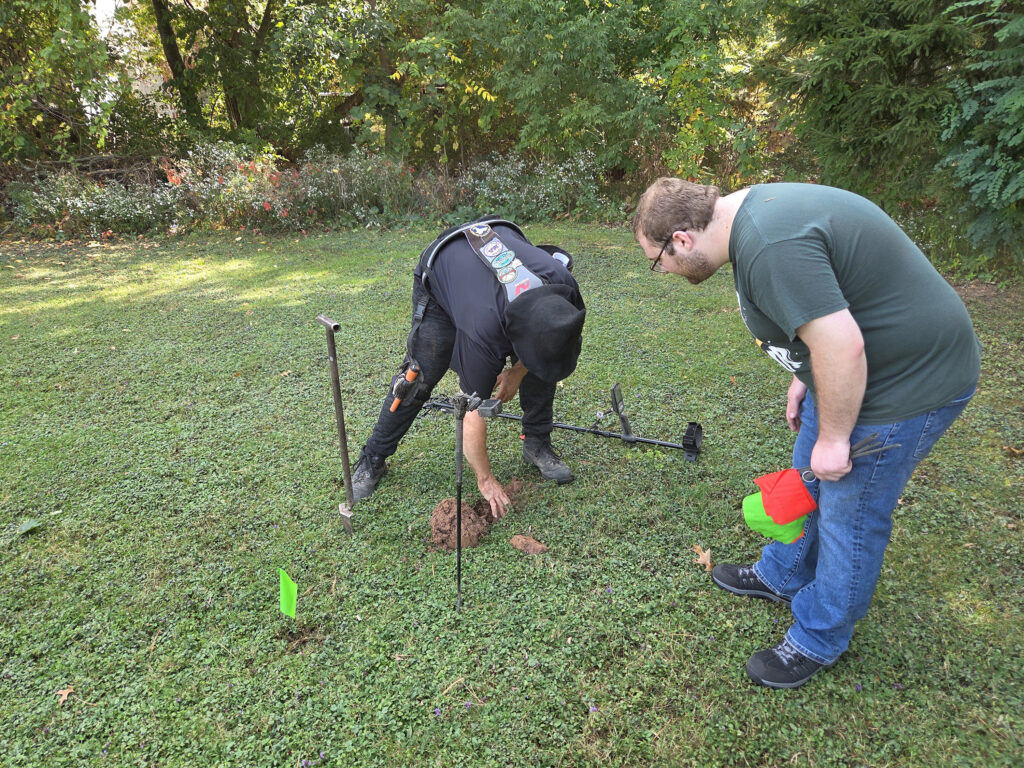
While most relic hunters are interested in gold, silver, and valuable coins (think gold doubloons), and tune out most everything else, our team of experts is searching for iron and other non-precious metals, such as cast-iron parts, bent nails, brass doorknobs, and hinges. Items like these would likely be present in the debris field of the original wooden Academy building after it burned and collapsed upon itself. While many of the original metal hardware items would have been cleaned and reused during the 1853 rebuilding of the Academy, it is hoped that enough may still remain to tell the story. With that in mind, we are looking for a roughly rectangular pattern of these types of metal finds in the ground, along with indications from the NDVI and GPR ground scans, that could outline the original 1836 foundation.
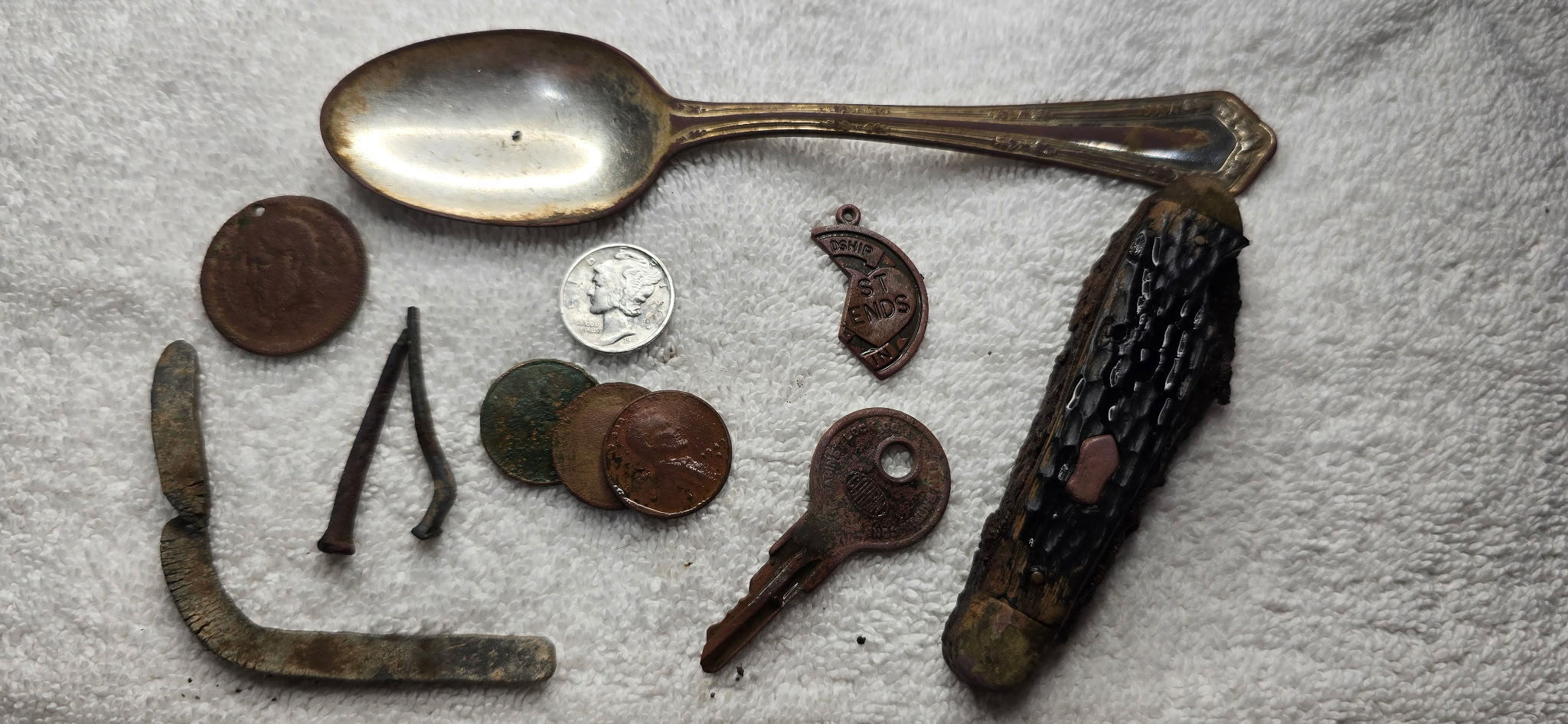
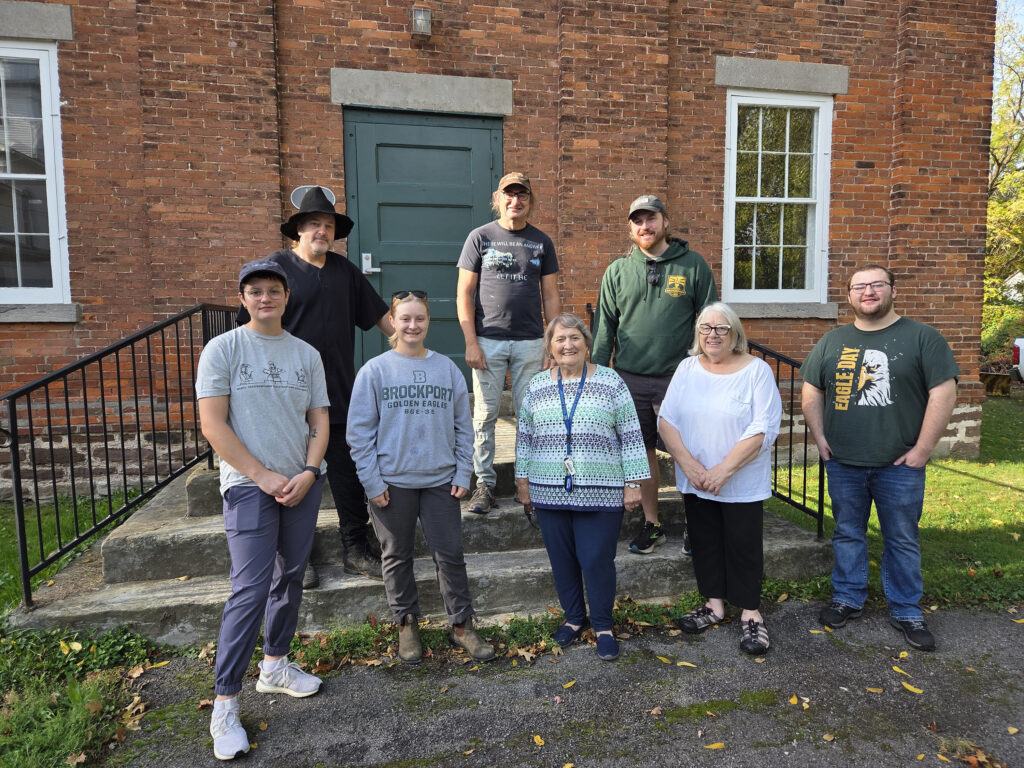
Phase One, completed on Saturday, September 27, was led by Dr. Smith, Dr. Richards, and Matt Bacchetta, along with two recent SUNY Brockport Archaeology graduates, Evelyn Patterson and Natalie Klein, and one current student, Wyatt Weiss. The focus of our investigation is an area just south of the Church and just to the east of the present brick Academy building. This full-day effort yielded our first NDVI scanning run – plus over 100 artifacts! (We covered less than half of the targeted area before we ran out of daylight.) These finds include hand-wrought iron “square nails” (which could date to the period of the original Academy construction), parts of an old coal-fired pot-belly stove (which could be the original school’s heating sole source – and possibly the source of the devastating fire), several old coins, many brick chips and piles of coal ash, a silver-plated spoon, a bone-handled pen knife (from the 1920s or 1930s), and four modern-day arrows. The most intriguing find of that day might not be directly related to the Academy – it is a Presidential Campaign token from 1884 when James G. Blaine ran against Grover Cleveland. One can picture campaign speeches held on the Academy grounds as candidates for the 1884 election passed through the county’s small towns, like Clarkson, seeking votes. These artifacts speak of 200 years of occupation on this site. The multitude of Phase One finds are currently in the process of being cleaned, conserved, and catalogued, and will eventually be put on display at the Academy.
Phase Two has already kicked off with a second drone flyover NDVI scan and mapping preparation for the GPR scan. An initial scan was completed on Monday, November 3, and another, more detailed scan is set to be completed in the near future. The combined SUNY Brockport team will work over the winter to merge the drone NDVI imaging, historical aerial photos, artifact details and discovery maps, the GPR scan results, and topographical data into a final report. This will be presented by Dr. Smith and the students this coming Spring to kick off the 2026 Lecture Series at the Clarkson Academy building.
A community open house and artifact cleaning day is being planned to showcase the project and its discoveries – stay tuned for a further update on Phase Two finds.
For additional information on this project, or to volunteer for future community events, contact Christopher Graham via the Clarkson Historical Society Facebook page or at www.clarksonhistoricalsociety.org.