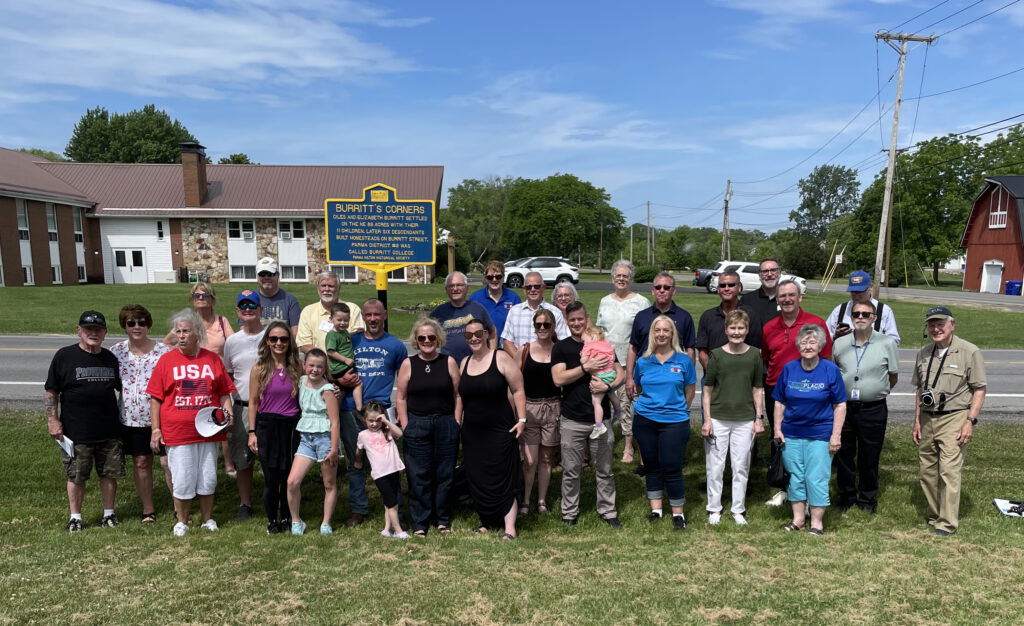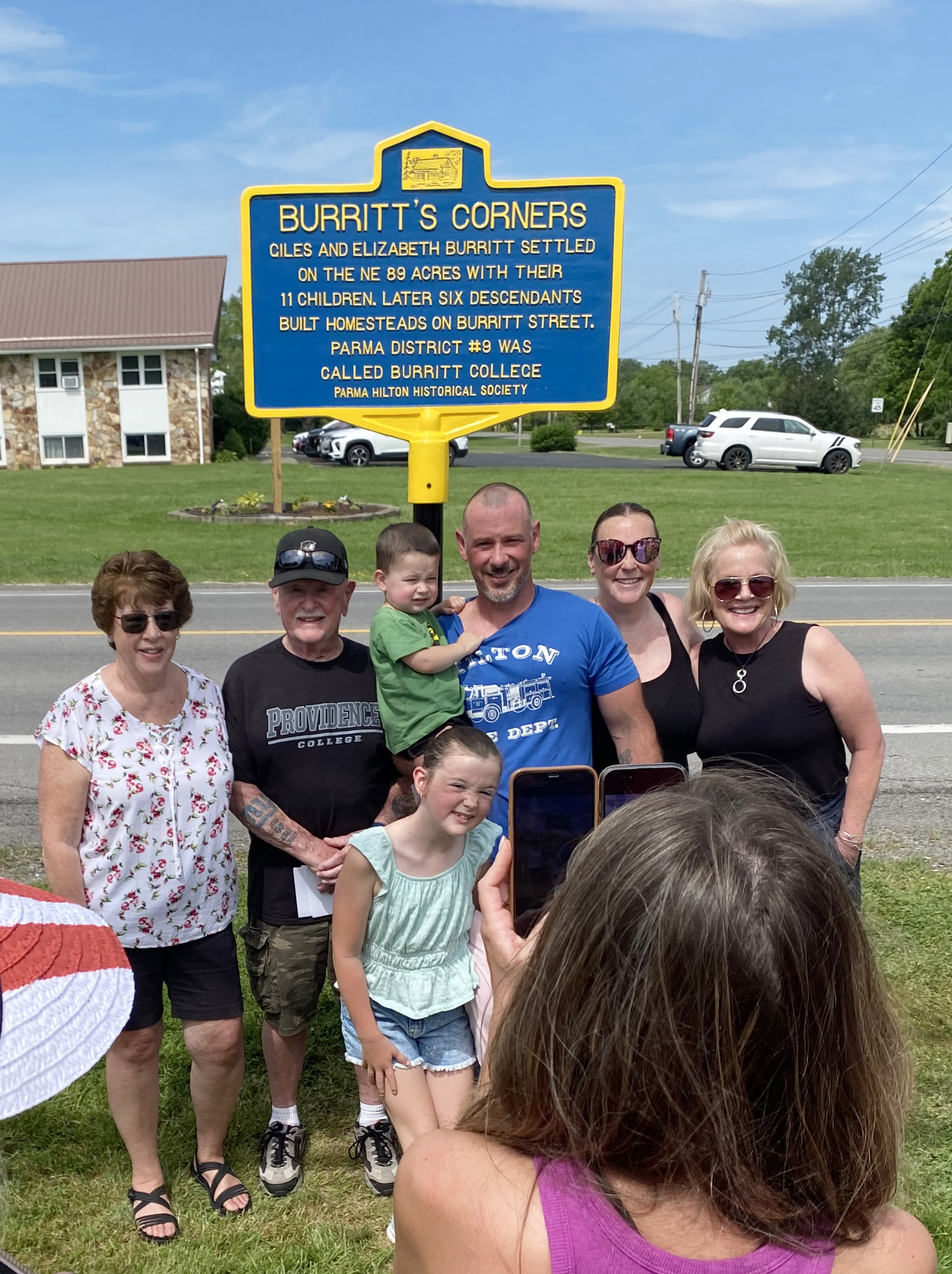
It was a slightly humid, but rainless morning on June 11 when 20 descendants of Giles Burritt, seven Parma Hilton Historical Society Board Members, and several Parma officials met to dedicate a historic marker for Burritt’s Corners at the intersection of Burritt Road and Route 259.
Giles and Elizabeth Burritt settled in Parma around 1833. Giles and several of his older sons drove teams west from Sand Lake Township, which was located just west of Albany and Troy, NY, to Parma. Mrs. Burritt and her daughters and younger sons traveled by the newly opened Erie Canal (1825) when they received word that a home was ready for them. Giles purchased an earlier home from Major Lockwood at the northeast corner of Route 259 and 89 acres from William Cox, a neighbor just south of the Corners.
The 150-acre farm the Burritt family owned in Sand Lake was on a south-facing hill slope. The view was great, but the land proved unproductive. Giles was in debt and fed up. Some of his neighbors from the Sand Lake area who had settled in Parma wrote to him about how flat and fertile the farmland was, so he decided to make the move. He and Elizabeth came with their 11 children – seven sons and four daughters – and dug in. In no time, they began to prosper.
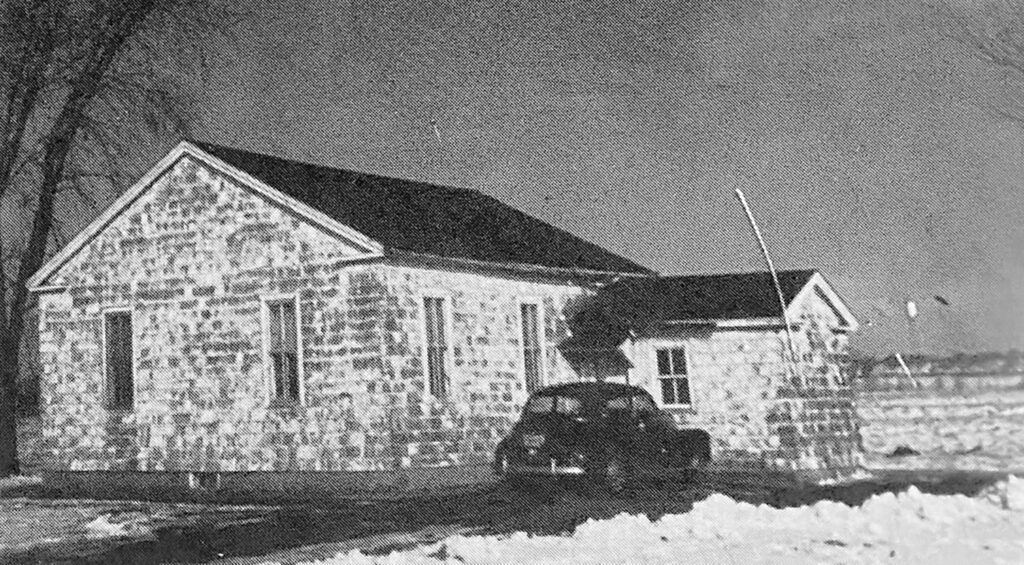
As their children reached majority and married, Giles and Elizabeth helped each one buy a farm on the road running east and west, which soon came to be called Burritt Street by locals and eventually became Burritt Road as we know it today. In time, there were nine Burritt families living on the road, both east and west of what was colloquially known as Burritt’s Corners. In the 1840s, a district school was built just east of their home to educate their neighbors and grandchildren. District #9, a one-room school, operated for over 100 years. It closed in 1949 when the Hilton School District was centralized. The building was destroyed by fire in the 1960s.
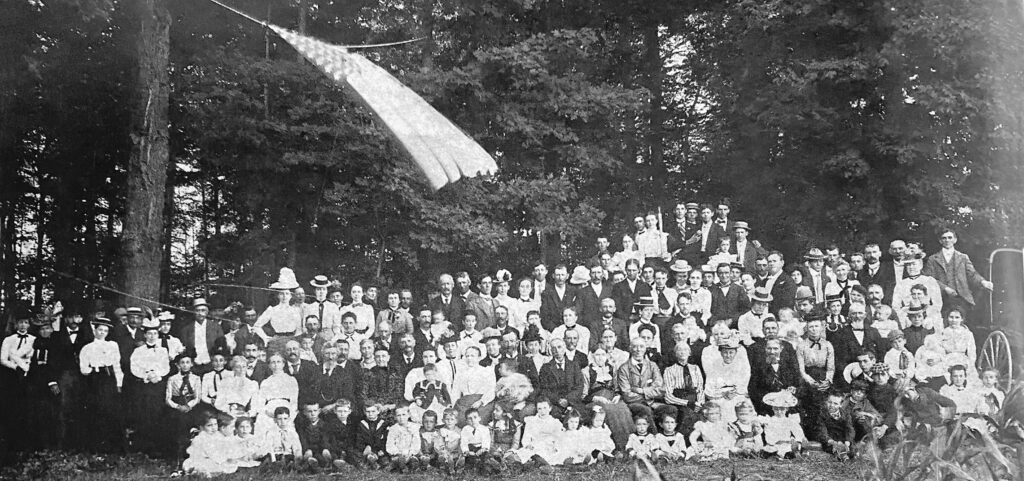
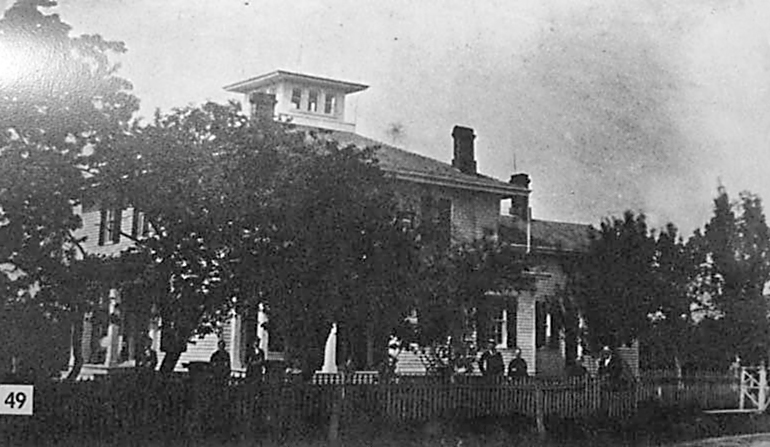
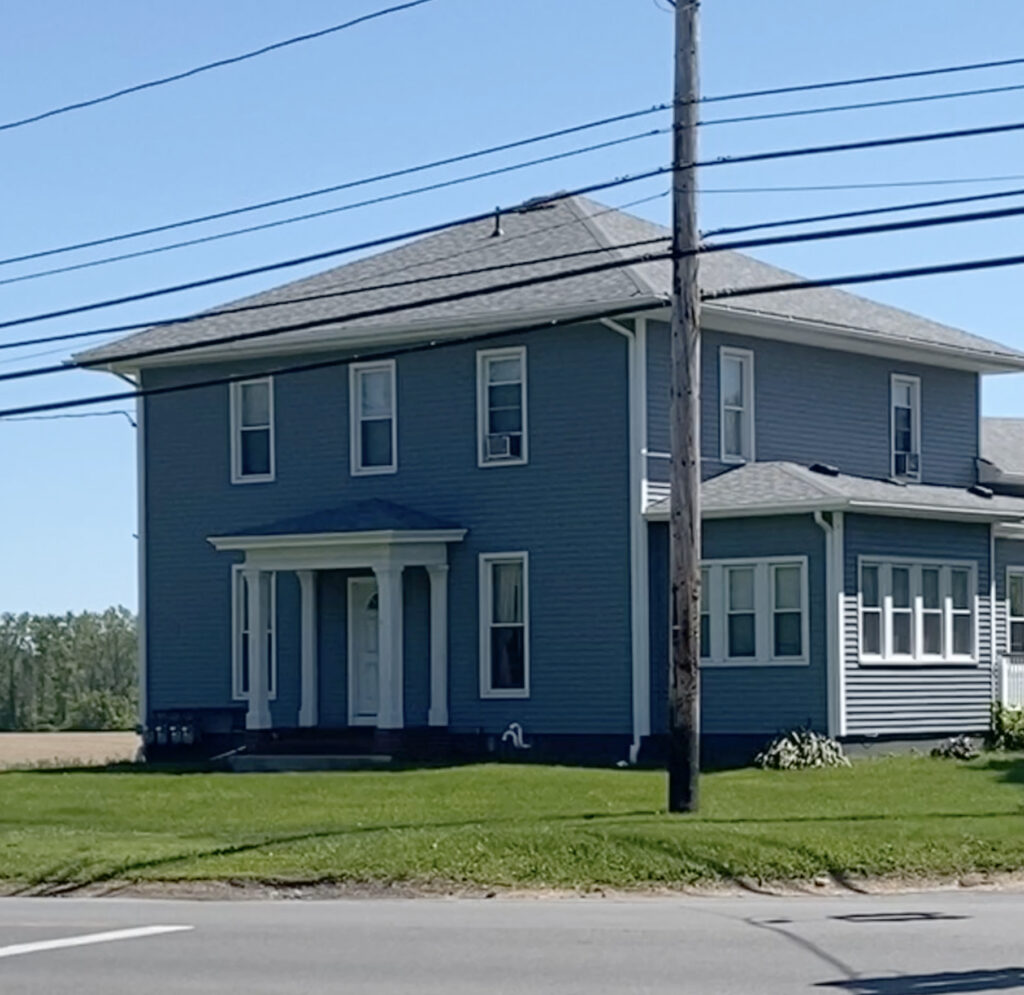
In 1850, Giles relocated the old house just east of the barns (the barns have disappeared) to where it stands today as 113 Burritt Road. The new house was an elaborate 14-room Italianate Villa-style home popular in that time. He unfortunately did not have many years to enjoy it, as he died in 1855 at the age of 66. His oldest son, Bailey, took over the home and farm, and it became known as the Burritt Homestead. As the family grew with grandchildren and great-grandchildren, reunions were held in the “Grove,” a wooded area back in the northeast corner of the farm. Well over 100 people would gather in the early 1900s to keep the family in touch.
Later, hard times came, and the homestead was sold and the land cultivated by others. In 1953, Betty Ingraham Egmore, a local nurse and descendant of Bailey Burritt, purchased the house and repurposed it into a nursing home; the first in Hilton. The Burritt Home, as it was called, could accommodate 18 patients, and the cost was $13 per day. It was a clean, caring, and comfortable setting for aged individuals no longer able to care for themselves, according to Charles Swift, Betty’s son, who came all the way from South Carolina to attend the marker dedication. He was invited to give his remarks on “Growing up in a Nursing Home,” which added much interest to the program.
Today, the old Burritt Homestead has been converted into apartments, and the land has been owned and cultivated by the Martin family for many years. Several years ago, the land was placed in the Genesee Valley Land Trust by the Martins and the Town of Parma, so it will undergo no further development.
The dedication was a memorable occasion for those who attended. The new Parma Hilton Historical Society Marker now dignifies one of Parma’s forgotten corners.
Provided information and photos