By Kristina Gabalski
I hope you are enjoying a delightful tomato harvest, but if you are not, it is not surprising. Tomatoes are a very popular garden crop for good reasons, but they do face many challenges from disease, insects, and environmental conditions. One reason is that tomatoes are native to tropical areas in South America and require some extra care to thrive in our climate.
Tomatoes are part of the nightshade family, which includes peppers, tomatoes, eggplants, and even petunias. According to the University of Illinois, recent research in genetics indicates the cherry-sized tomato originated in Ecuador about 80,000 years ago without any domestication by humans. After being cultivated there, it is believed that the cherry-sized fruits spread north toward Mesoamerica – perhaps via humans, perhaps via birds or other natural routes – and after many years of survival as a weedy, semi-domesticated plant, the tomato’s fruit reverted back to the smaller wild tomatoes of South America. It was these plants that were then domesticated into our modern tomato in Mexico and Central America – around 7,000 years ago.
The tomato was introduced to Europe by explorers in the 16th and 17th centuries, but because plant propagators were familiar with the toxicity of the nightshade family, the fruits were slow to catch on.
Fast forward to today, and the tomato is the most popular garden vegetable in the U.S. It is cultivated all over the world in places where the growing season is long enough. As you work to grow the perfect tomato, remember the long history of this juicy nightshade and understand there will be challenges with this non-native.
Environmental issues that can impact your tomatoes include blossom-end rot, which is the result of calcium deficiency – not a disease. Even if you have sufficient calcium in your soil, the plants may have difficulty taking it up. The condition can be aggravated by drought, root damage, or excess nitrogen. Uneven watering can also make this condition more severe – tomatoes are pretty picky about watering. To combat blossom-end rot, maintain a frequent, regular watering schedule that does not allow the plants to dry out. You can also amend your soil with calcium-based fertilizer.
Tomatoes can suffer from flower drop, as they are sensitive to temperatures below 50 degrees F and above 85 degrees F. Improved weather conditions can help with this issue.
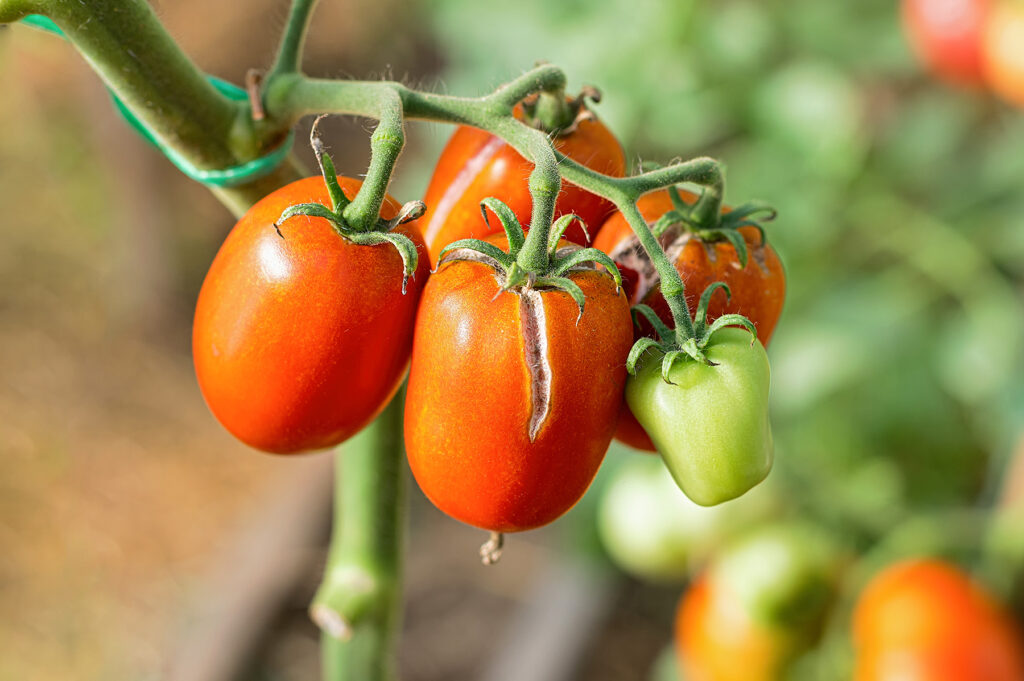
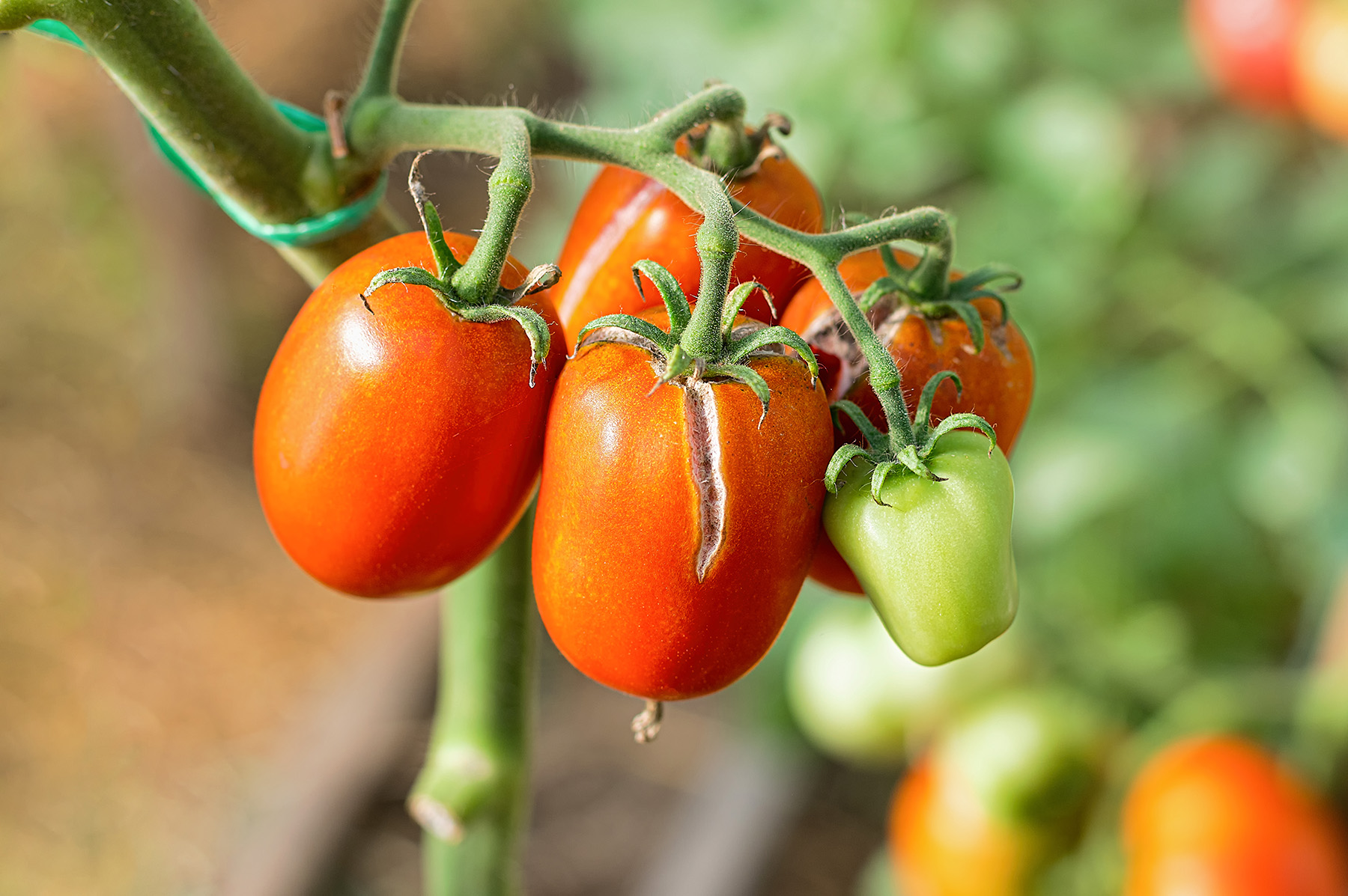
Back to watering issues, cracks in tomatoes are often the result of uneven watering – again, try to keep the soil evenly moist. Some varieties are also more prone to cracking than others.
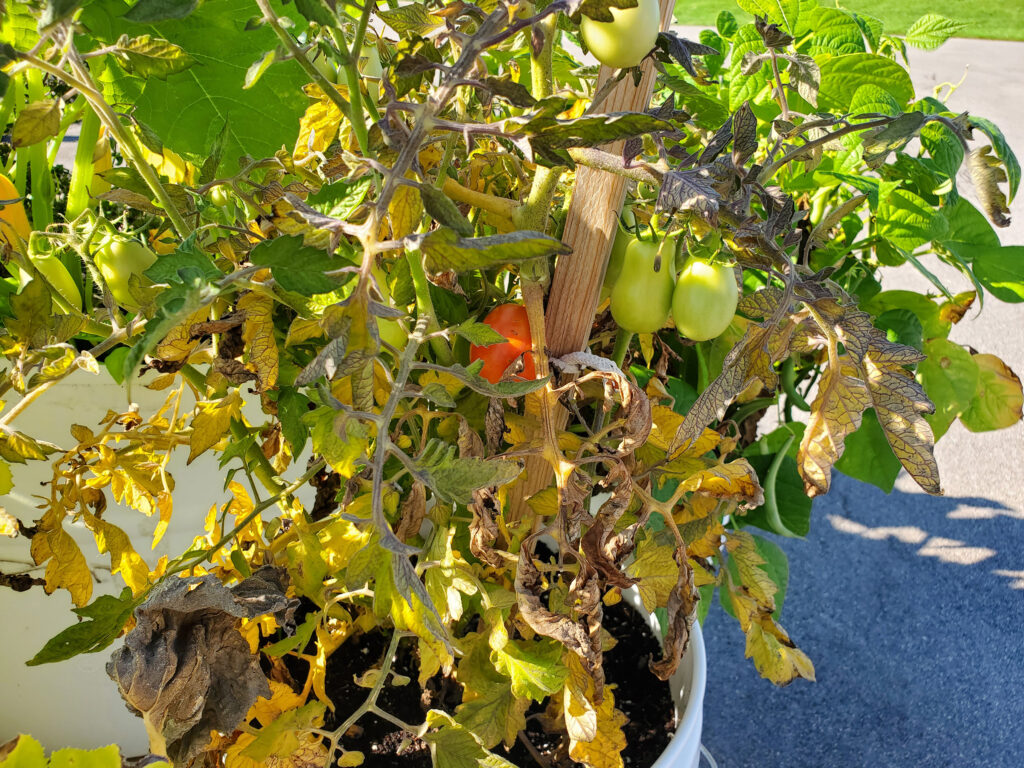
Early blight and late blight strike fear in the hearts of gardeners. These two plant diseases can be prevented by fungicides, which are applied BEFORE the plants are affected. If you have had issues with early and late blight, you may want to apply fungicide according to package directions beginning early in the season. Watering, again, is an issue in regard to these diseases. Water splashing from open soil onto leaves either during watering or rain can spread the disease. Water at the ground level, use mulch, and prune the lowest branches of your tomato plants. Dark, concentric-ringed spots that cover the lower leaves and stems are a sign of early blight. Late blight is characterized by water-soaked patches and lesions on stems, foliage, and fruit. The leaves and stems will look blackened.
Finally, if insects are munching on leaves and fruit, the likely culprits are either tomato hornworms – which can totally defoliate plants (remove them by hand) or slugs. Keep your tomato patch well weeded to help control these insects, hand-pick from plants, or try diatomaceous earth sprinkled around plants to create a barrier.